
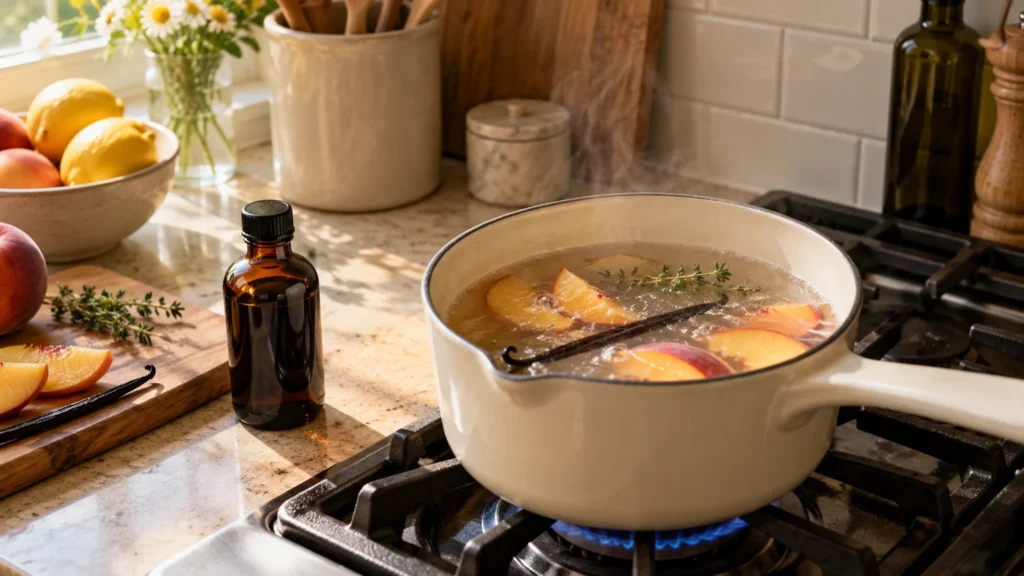
Vanilla simmer pot recipes create a soft, warm home fragrance using culinary vanilla with fruit, herbs, or other aromatic ingredients. Vanilla can be the main scent, soften a stronger blend, or connect contrasting aromas without making every simmer pot smell overly sweet.
The key is balance. Instead of adding many ingredients, decide what role vanilla should play and choose only the ingredients needed to support that result.
For the exact ingredients, quantities, simmer time, and step-by-step method, use the recipe card below.
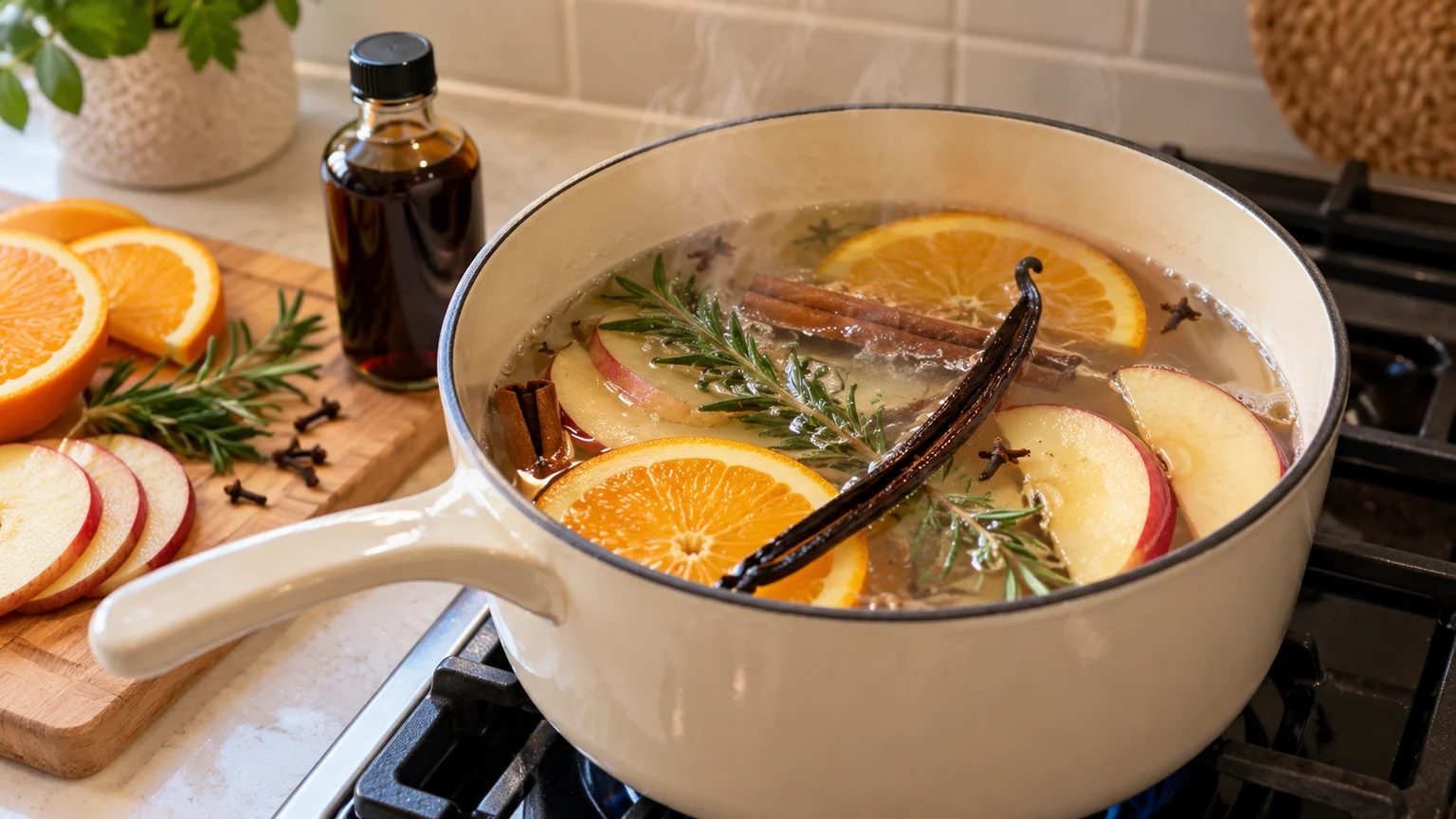
Vanilla Pear Ginger Simmer Pot for Cozy Home Fragrance
Ingredients
Equipment
Method
- Wash the pear and ginger, then slice them as directed.
- Add the pear slices and fresh ginger to a medium saucepan.
- Pour in 4 cups of water.
- Heat over medium heat until gentle steam and small bubbles appear.
- Reduce the heat to low and stir in the vanilla extract.
- Maintain a gentle uncovered simmer for 1–2 hours.
- Check the water level every 20–30 minutes and add more hot water whenever needed.
- Turn off the heat before leaving the room for an extended period or leaving home.
Notes
Which Vanilla Is Best for Simmer Pots?
Vanilla extract is the easiest option for most simmer pots because it is widely available, simple to measure, and easy to adjust. A vanilla bean or previously scraped vanilla pod works well when you want vanilla itself to remain more noticeable.
The best option depends on what you already have and how prominent you want the vanilla fragrance to be.
Vanilla Extract
Vanilla extract is the most convenient choice for everyday use. It disperses quickly in warm water and works well when vanilla is either the main aroma or a supporting note.
Use extract when:
- You want easy adjustment.
- Other aromatic ingredients are present.
- You do not want to use an expensive vanilla bean.
- You want a simple pantry ingredient.
Vanilla Bean or Used Pod
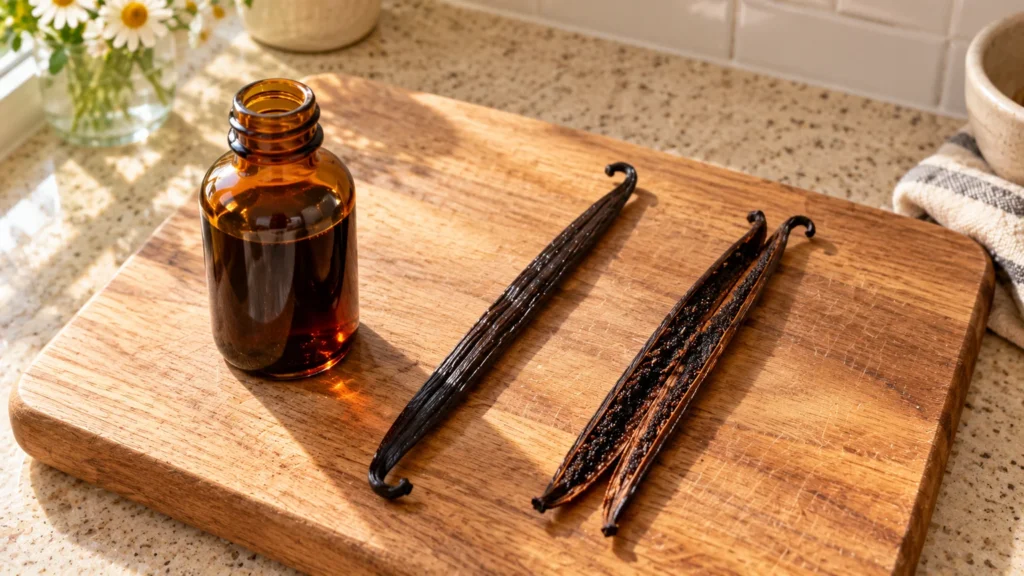
A vanilla bean creates a softer, slower-developing fragrance. If you use vanilla beans for baking, save the scraped pod rather than discarding it.
Used pods are especially useful because they allow you to get more value from an ingredient that has already served its main culinary purpose.
Vanilla Paste, Essence, and Imitation Vanilla
These can also work when they are clearly intended for culinary use.
Product names and strengths vary, particularly with vanilla essence and vanilla flavoring, so begin conservatively instead of assuming they behave exactly like pure vanilla extract.
For most readers:
- Extract: easiest everyday choice
- Whole bean: best for vanilla-forward blends
- Used pod: best low-waste choice
- Paste: useful if already available
- Essence or imitation vanilla: practical budget option
How Much Vanilla Should You Use?
The right amount depends on whether vanilla is supposed to dominate or simply support the rest of the fragrance.
A smaller amount works better when the simmer pot already contains strong or distinctive aromatics. A more vanilla-forward blend can use more, but increasing vanilla should usually be gradual.
Before adding more, consider:
- Is the water hot enough?
- Is another ingredient overpowering the vanilla?
- Is there too much water?
- Is the room large or highly ventilated?
- Have you given the fragrance enough time to develop?
Adding extra vanilla will not fix every weak simmer pot. Sometimes the better solution is reducing a competing ingredient.
Should Vanilla Be the Base, Bridge, or Accent?
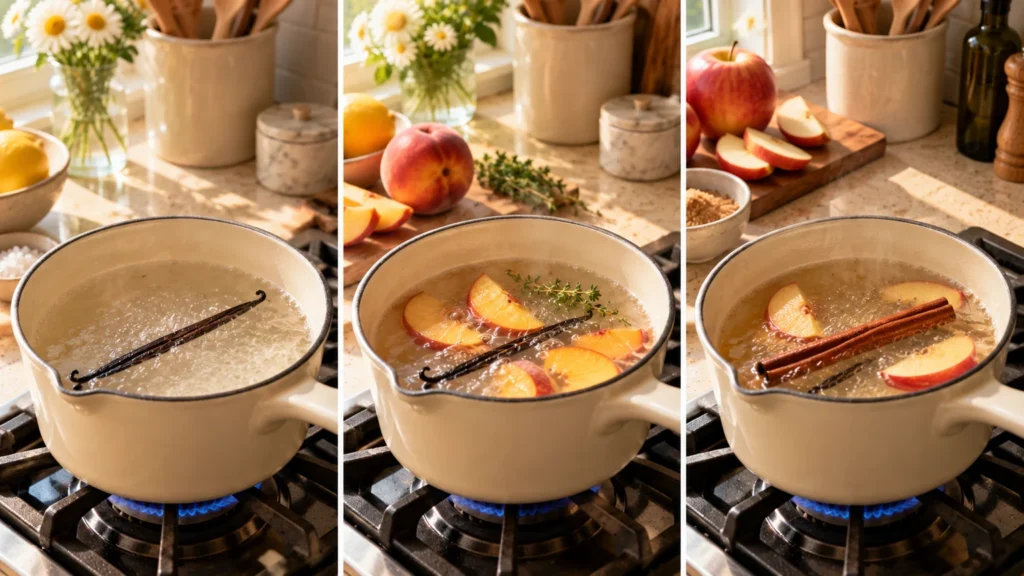
A simple way to build better vanilla simmer pot recipes is to decide whether vanilla should act as the base, bridge, or accent.
This keeps the blend focused and prevents unnecessary ingredients.
Vanilla as the Base
Choose this when you want vanilla to be one of the first aromas you notice.
Keep the ingredient list simple and avoid surrounding it with several strong aromatics.
This works best for:
- Soft home fragrance
- Vanilla-forward blends
- Simple two- or three-note combinations
Vanilla as the Bridge
Vanilla can connect two different scent directions.
For example, it can soften a fresh aroma while also adding warmth, making the overall fragrance feel more balanced without becoming strongly vanilla-scented.
This is often the most useful role for vanilla.
Vanilla as the Accent
Use vanilla as an accent when another ingredient should remain dominant.
A small vanilla note can soften a strong fragrance without changing its overall character.
If the blend is already complex, start with less vanilla rather than adding more ingredients.
Simple rule: if you cannot identify what vanilla is supposed to do, simplify the simmer pot first.
Which Ingredients Can Overpower Vanilla?
Some ingredients leave plenty of room for vanilla, while others can quickly hide it.
Instead of asking only whether two ingredients “go together,” think about how strongly the companion ingredient behaves.
Gentler ingredients allow vanilla to lead. Moderate aromatics work well when vanilla acts as a bridge. Strong spices, roasted aromas, or highly aromatic herbs may push vanilla into the background.
Use this decision pattern:
- Vanilla is too weak: identify what is dominating first.
- Blend feels harsh: reduce the strongest ingredient.
- Blend feels muddy: remove an ingredient.
- Blend is balanced: stop adjusting it.
A simmer pot does not improve simply because more ingredients are added.
Which Vanilla Simmer Pot Recipe Should You Choose?
Choose a blend according to the type of fragrance you want rather than the season alone.
For a Vanilla-Forward Scent
Keep the supporting ingredients mild.
Soft fruit or a used vanilla pod works well when the goal is to preserve vanilla as the main aroma.
For a Fresh Vanilla Scent
Use vanilla as a bridge rather than the dominant fragrance.
Pair it with a restrained fresh or herbal direction so the final result feels lighter instead of bakery-like.
For a Deeper Vanilla Scent
Let a richer aromatic lead while vanilla stays in the background.
This creates depth without needing a long list of warming spices.
For a Seasonal Vanilla Scent
Change the supporting ingredients instead of changing the basic role of vanilla.
Lighter companions suit warmer months, while deeper fruit and warmer aromatic directions can work better in cooler seasons.
The recipe card provides one complete formulation. Use the framework above when you want to adjust it or create another vanilla simmer pot without overcrowding the saucepan.
Why Is My Vanilla Simmer Pot Too Weak?
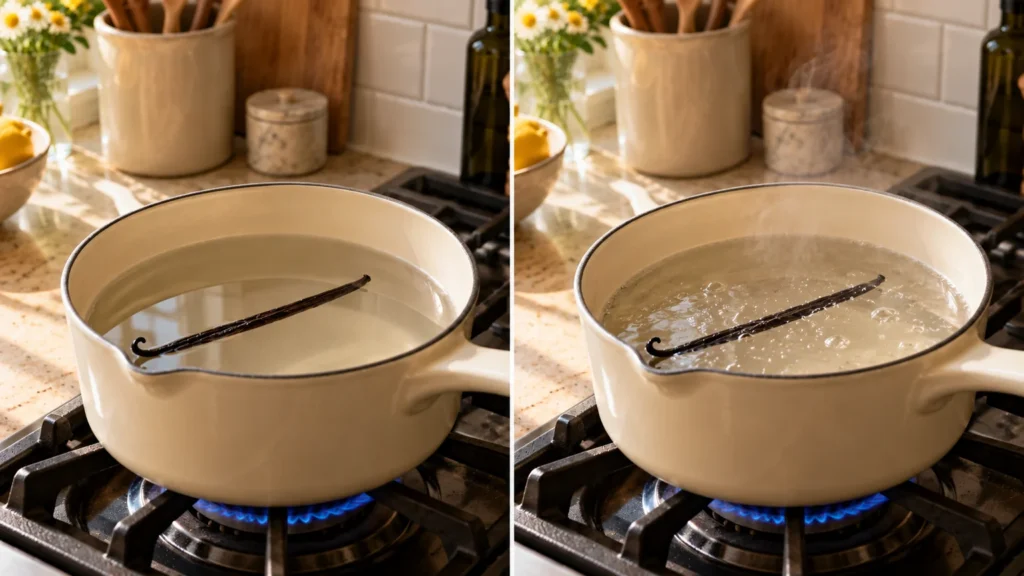
If your simmer pot seems weak, do not immediately add more vanilla.
Check the setup first.
The Water Is Not Hot Enough
A simmer pot needs steady heat and visible steam to release fragrance effectively.
Warm water alone may produce very little noticeable aroma.
Another Ingredient Is Dominating
Strong aromatics can easily hide vanilla.
If one ingredient is clearly taking over, reduce or remove some of it before increasing the vanilla.
The Blend Is Too Diluted
Adding a large amount of water without adjusting the aromatics can make the fragrance seem weaker.
More water can extend the simmering time, but it does not automatically produce a stronger scent.
The Blend Has Too Many Ingredients
If several scents compete at once, the result can become unclear rather than stronger.
Simplifying the pot is often more effective than adding another ingredient.
Use this troubleshooting order:
- Check the heat.
- Check the water level.
- Identify the dominant aroma.
- Simplify if necessary.
- Adjust vanilla last.
Does Pot Size Affect a Vanilla Simmer Pot?
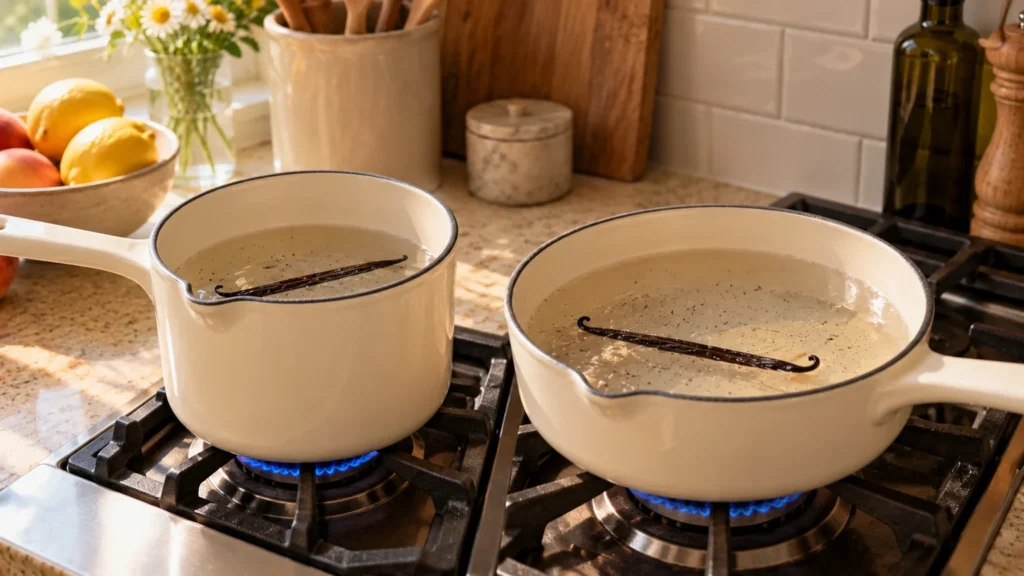
Yes. Pot shape and water volume influence how quickly fragrance and moisture move into the air.
A narrower saucepan generally loses water more slowly, while a wider pan exposes more liquid surface and may release aromatic steam more quickly.
However, a wider pan can also evaporate faster.
For most home use, the important factors are:
- Enough water to safely surround the ingredients
- Gentle rather than aggressive heat
- Regular water checks
- A saucepan appropriate for the size of the batch
Do not increase the heat simply to make the room smell stronger. A rolling boil mainly causes faster water loss.
How Long Should a Vanilla Simmer Pot Simmer?
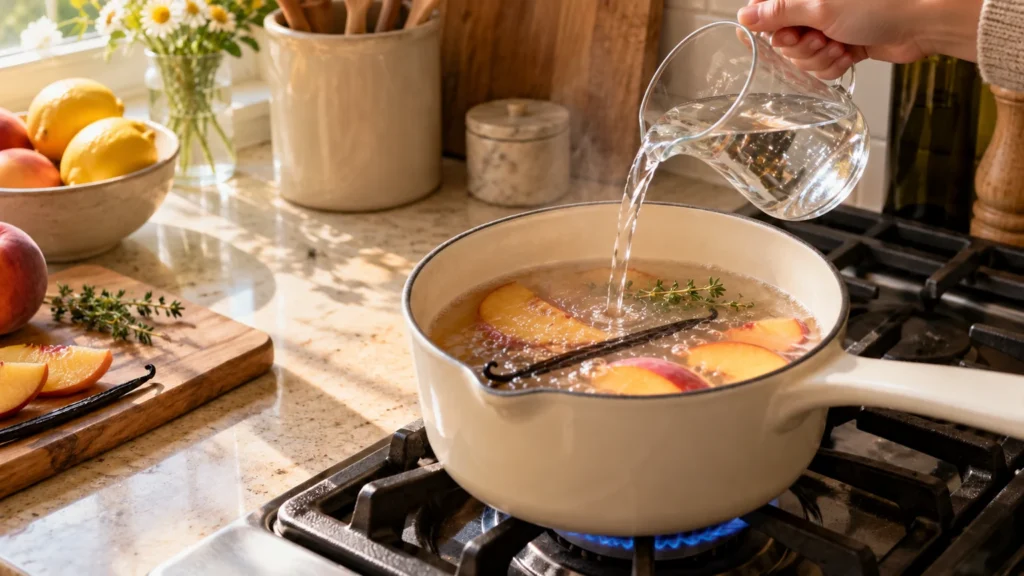
A vanilla simmer pot usually needs some time to become noticeable, and the fragrance may continue changing as different ingredients heat.
There is no single required finishing time.
Instead, monitor:
- Water level
- Aroma strength
- Ingredient condition
- Whether one scent becomes too dominant
Longer simmering does not always mean better fragrance.
If the blend smells balanced, there is no need to keep strengthening it.
Always add more water before the liquid level becomes too low.
Do Vanilla Simmer Pots Remove Odors?
A vanilla simmer pot adds fragrance rather than removing the underlying cause of an odor.
If the room smells because of burned food, spoiled food, dampness, smoke, trash, or another persistent source, deal with that problem first.
Use appropriate ventilation where needed, then use a simmer pot afterward if you want to add a pleasant fragrance.
Avoid describing simmer pots as products that:
- Purify the air
- Detox the home
- Remove pollutants
- Kill airborne germs
A more accurate description is that they create a temporary aromatic atmosphere.
Can You Reuse a Vanilla Simmer Pot?
You can sometimes reuse a simmer pot when the ingredients are still fresh.
Same-day reuse is generally the simplest option. If the cooled mixture is being saved longer, store it appropriately and inspect it before reheating.
Discard it if you notice:
- Mold
- Unpleasant or sour odor
- Slimy ingredients
- Fermentation
- Other signs of spoilage
Used vanilla pods and other durable aromatic ingredients usually hold up better than soft fruit or delicate herbs.
Do not try to extend the life of a simmer pot indefinitely.
What Should You Avoid in a Vanilla Simmer Pot?
Stick to ingredients that you can clearly identify and that are appropriate for the intended use.
Avoid:
- Unknown decorative botanicals
- Perfume
- Unidentified fragrance products
- Spoiled fruit or herbs
- Products with unclear ingredient labeling
The recipes on this site are designed around culinary vanilla and ordinary aromatic ingredients rather than concentrated fragrance oils.
If a product’s intended use is unclear, leaving it out is safer than assuming that anything labeled “vanilla” behaves like vanilla extract.
Are Vanilla Simmer Pots Safe?
Treat a simmer pot like any other pan of heated liquid.
Keep it attended and never allow the water to boil dry.
Also:
- Keep children away from the hot pan.
- Keep pets away from the liquid and ingredients.
- Add water before ingredients become exposed.
- Turn off the heat before leaving the area for an extended period.
- Treat a simmer pot used for home fragrance as non-drinkable.
If you have pets with known respiratory sensitivities or questions about a particular ingredient, consult your veterinarian.
Vanilla Simmer Pot Recipe Checklist
Before making or adjusting a vanilla simmer pot, ask:
- Should vanilla be the base, bridge, or accent?
- Is another ingredient likely to overpower it?
- Is the water amount appropriate?
- Is the fragrance problem really caused by too little vanilla?
- Would removing an ingredient improve the blend?
- Can every ingredient be clearly identified?
- Is the water level still safe?
The best vanilla simmer pot is not the one with the longest ingredient list. It is the one where every ingredient has a clear purpose.
FAQs About Vanilla Simmer Pot Recipes
Can You Put Vanilla Extract in a Simmer Pot?
Yes. Culinary vanilla extract works well in simmer pots and is one of the easiest vanilla options to adjust gradually.
Can You Use Vanilla Essence?
Yes, if it is clearly labeled for culinary use. Strength varies by product, so start conservatively and adjust after the fragrance develops.
Can You Use a Used Vanilla Bean Pod?
Yes. A scraped vanilla pod can still contribute fragrance and is a practical way to reuse it after baking.
Can You Make a Vanilla Simmer Pot Without Cinnamon?
Yes. Cinnamon is optional. Vanilla can work with fruit, herbs, roots, and other aromatic directions depending on the scent you want.
Why Can’t I Smell the Vanilla?
Check heat, water volume, airflow, and competing ingredients first. Another aroma may be masking the vanilla.
Does More Vanilla Make the Scent Stronger?
Not always. Too much water, low heat, or stronger ingredients may be the real reason the fragrance seems weak.
Can You Use a Slow Cooker?
Yes. A slow cooker can provide steady heat, although the fragrance may develop more slowly than with a stovetop saucepan.
Can You Leave a Vanilla Simmer Pot Unattended?
No. Always monitor a heated simmer pot and keep enough water in the vessel to prevent it from boiling dry.
Myra is the founder of Simmer Pot Recipes, where she shares cozy simmer pot recipes, stovetop potpourri ideas, and natural home fragrance blends for every season. She helps readers make their homes feel warm, fresh, and inviting using simple fruits, herbs, spices, and everyday ingredients.