
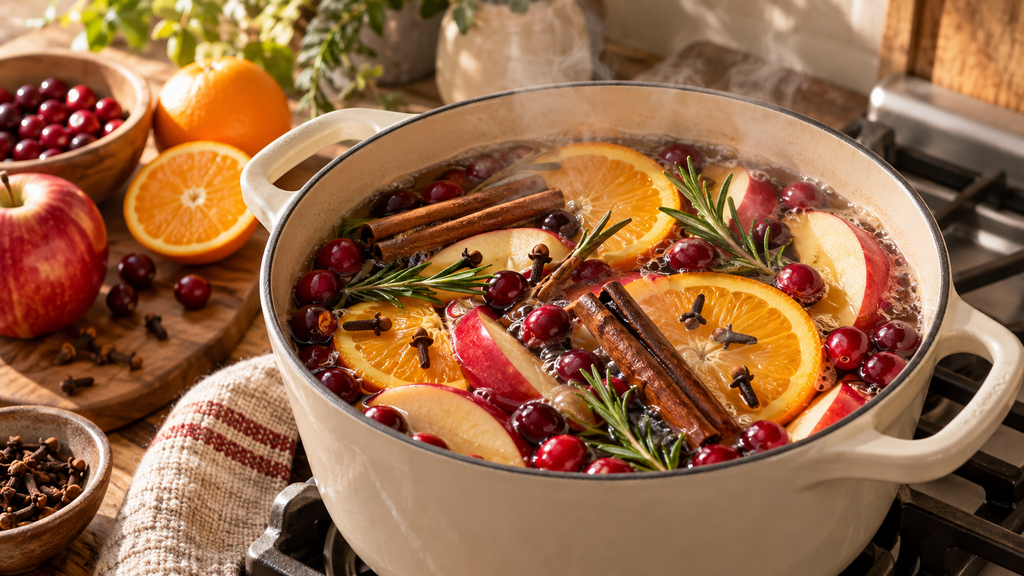
Simmer pot recipes make home fragrance using gently heated water, citrus, herbs, and whole spices. Orange and cinnamon smell warm and familiar; lemon and rosemary are fresher. All mixtures are for home fragrance only, never consumption.
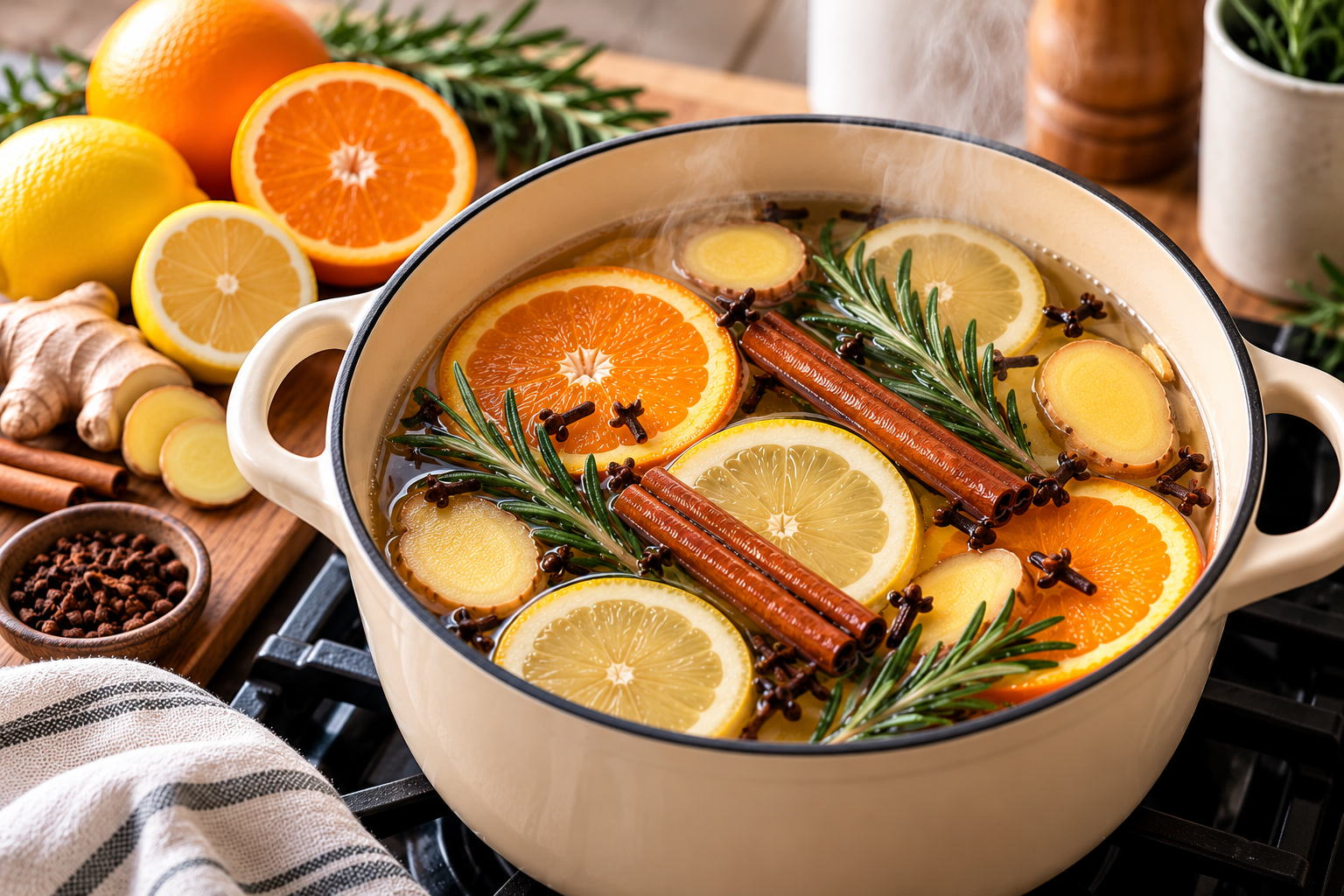
Easy Orange Cinnamon Simmer Pot for Cozy Days
Ingredients
Equipment
Method
- Wash the orange. Rinse the orange thoroughly and remove any produce stickers.
- Slice the fruit. Cut the orange into thin, even rounds.
- Add the ingredients. Place the orange slices, cinnamon sticks, and whole cloves in a 3-quart saucepan.
- Pour in the water. Add 6 cups of water, ensuring the saucepan has adequate space above the liquid.
- Heat gently. Warm over medium heat until gentle steam and small bubbles appear.
- Reduce the heat. Turn the burner to low and maintain a gentle simmer without vigorous boiling.
- Monitor the water. Stay nearby and check the water level every 20–30 minutes.
- Replenish as needed. Carefully add more hot water whenever the liquid level becomes low.
- Turn off the heat. Stop simmering when finished or whenever you cannot supervise the saucepan.
Notes
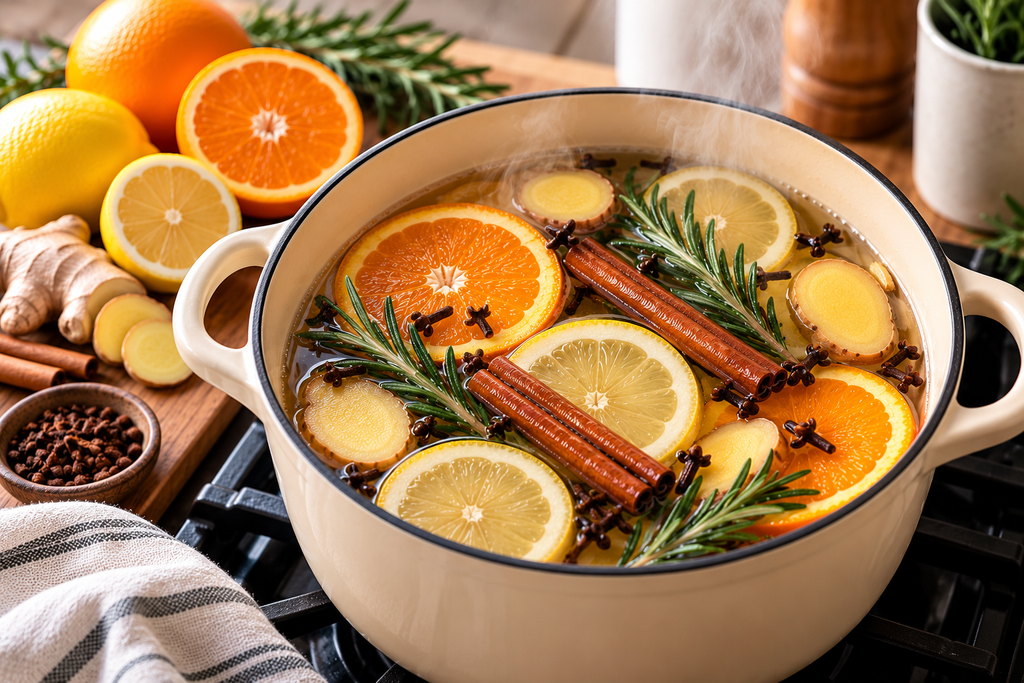
What Are Simmer Pot Recipes?
A simmer pot, also called stovetop potpourri, releases fragrance as warm water carries aromatic compounds from fruit peels, spices, and herbs into the air.
It lets you choose your ingredients, but it does not purify indoor air. Begin with a few complementary aromatics.
What Are the Best Simmer Pot Ingredients?
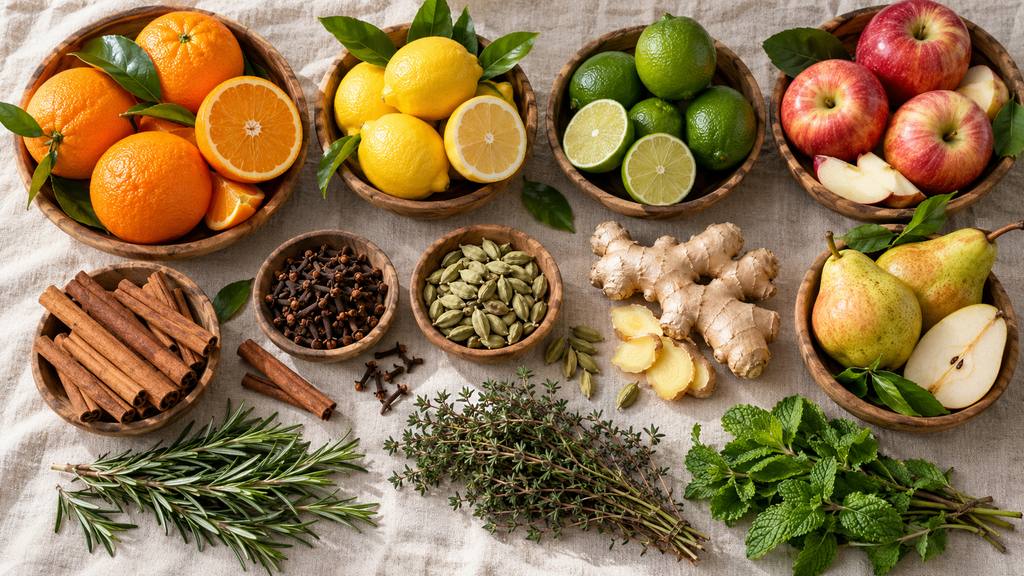
Orange, lemon, and lime peels provide bright citrus notes; apples and pears add softer fruit character. Cinnamon, cloves, cardamom, ginger, and star anise create distinct warm accents.
Rosemary, thyme, and mint contribute herbal freshness.
- Warm: Orange, cinnamon, and a few cloves.
- Fresh: Lemon, rosemary, and mint.
- Less sweet: Pear, ginger, and cardamom.
Use clean, identified ingredients without spoilage or unsuitable treatments. Whole spices leave less residue.
How Do You Make a Simmer Pot?
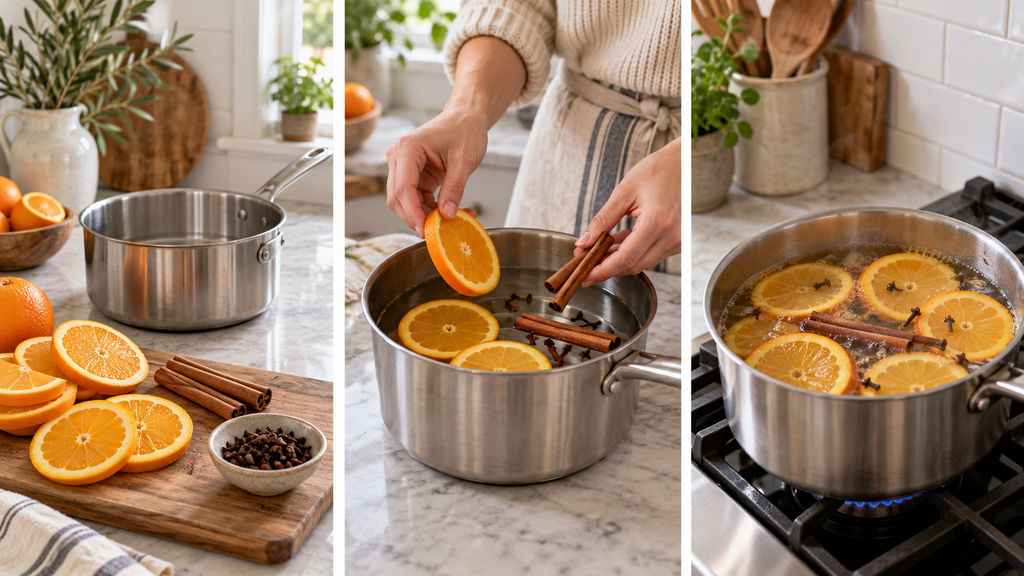
For a beginner blend, put one sliced orange, two cinnamon sticks, three whole cloves, and approximately six cups of water in a medium saucepan.
Bring toward a gentle simmer, then lower the heat. Remain nearby, check the liquid frequently, and add water before it runs low. Stop heating whenever you cannot supervise the pot.
A rosemary sprig adds herbal contrast; removing cloves makes the blend milder. Change one ingredient at a time.
Which Simmer Pot Recipes Should You Try?
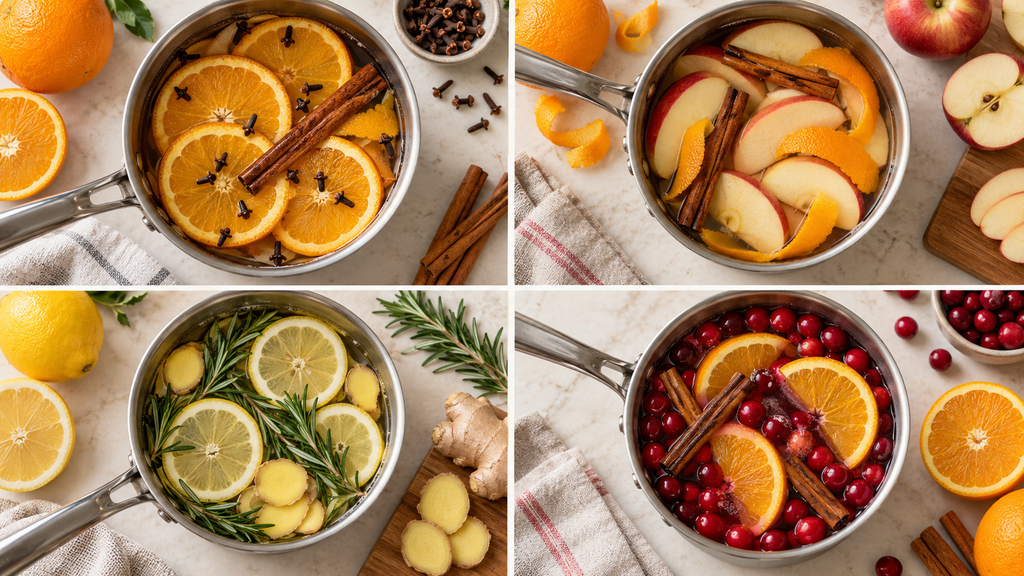
For each blend, add four to six cups of water as capacity permits. Simmer under supervision.
1. Classic Orange Cinnamon
Ingredients:
- 1 sliced orange
- 2 cinnamon sticks
- 3 whole cloves
A reliable warm, citrus-spice starting point.
2. Apple Cinnamon
Ingredients:
- 1 sliced apple
- 2 cinnamon sticks
- A little orange peel
A soft, autumn-inspired variation.
3. Lemon Rosemary
Ingredients:
- 1 sliced lemon
- 1 small rosemary sprig
- 2 ginger slices
Bright and herbal without cinnamon.
4. Cranberry Orange
Ingredients:
- 1 sliced orange
- ½ cup fresh cranberries
- 2 cinnamon sticks
A colorful winter combination.
5. Citrus Mint
Ingredients:
- 1 sliced lemon
- Peel from ½ lime
- 1 small mint sprig
A lighter citrus-forward blend.
6. Pear Ginger
Ingredients:
- 1 sliced pear
- 3 thin ginger slices
- 2 crushed cardamom pods
Warm without heavy cloves.
7. Orange Cardamom
Ingredients:
- 1 sliced orange
- 4 lightly crushed cardamom pods
- 1 cinnamon stick
Floral-spicy citrus.
8. Rosemary Winter
Ingredients:
- 1 sliced orange
- 1 small rosemary sprig
- 1 cinnamon stick
- 2 whole cloves
Herbal winter fragrance.
Which Recipes Work Best by Season?
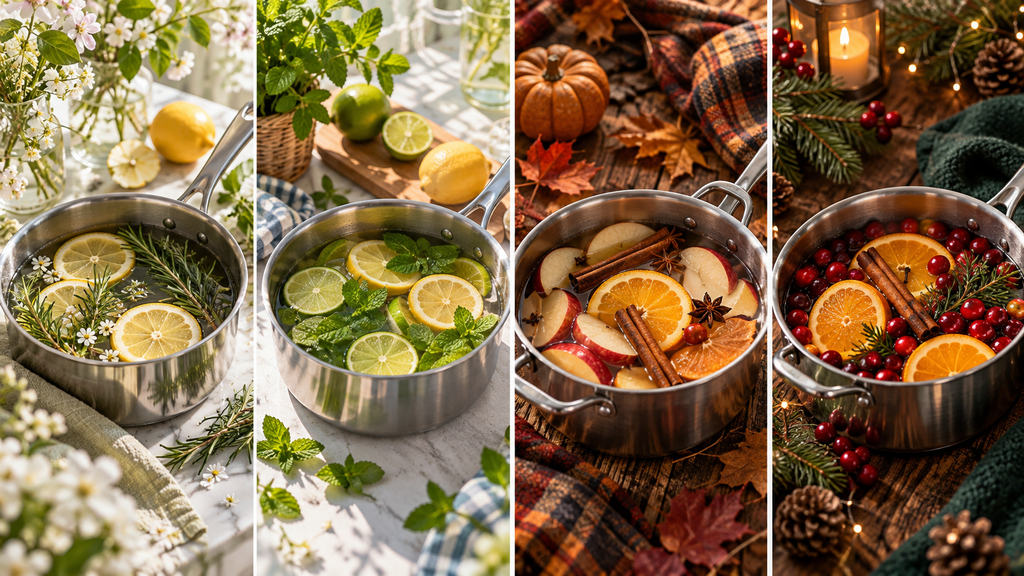
Choose spring combinations with lemon and herbs; summer blends with lime and mint; fall mixtures with apple and cinnamon; and winter scents with orange, cranberry, and spices.
In warm climates, a fresh citrus blend may suit December better than a heavy spiced one. Use available local ingredients.
How Do You Choose a Simmer Pot Recipe?
Identify the dominant scent you prefer: warm spice, fresh citrus, or green herbs.
Then consider ingredient availability, room ventilation, and household sensitivities.
A small space may benefit from fewer strong spices. Start modestly and adjust once the fragrance develops.
Fresh vs. Dried Simmer Pot Ingredients

Fresh fruit and herbs are convenient for same-day use and colorful presentation.
Fully dried orange slices and whole spices work better for advance preparation and gift jars.
Moisture can encourage spoilage in sealed packaging, so never label jars containing fresh fruit as shelf-stable.
Stovetop vs. Slow Cooker Simmer Pots

A stovetop saucepan heats quickly and allows direct adjustment.
A suitable slow cooker warms gradually, but lid position and safe operation depend on its manufacturer’s directions.
Both require regular water checks and supervision. Neither should run while you sleep or leave home.
How Can You Adjust Simmer Pot Fragrance?
For more citrus, add a little peel; for less spice, remove cloves or cinnamon.
If rosemary dominates, remove part of the sprig.
Do not turn up the burner to force a stronger aroma: higher heat accelerates evaporation.
If fragrance feels uncomfortable, turn off the heat and ventilate.
How Do You Make Simmer Pot Gift Jars?
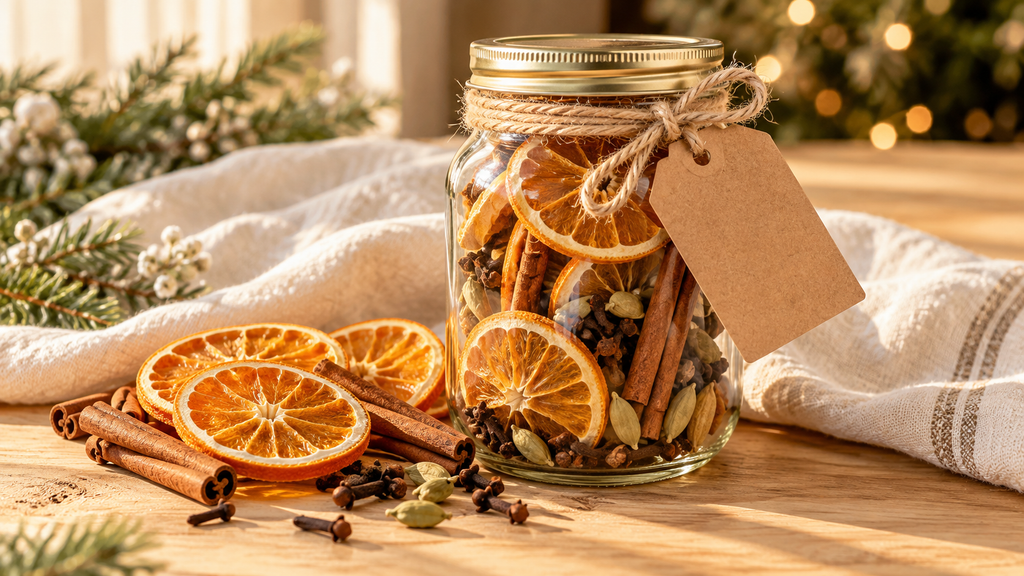
For one gift jar, combine four to six thoroughly dried orange slices, two cinnamon sticks, and four cloves.
Package in a clean, dry container and label the ingredients.
Include instructions to empty the blend into a saucepan, add four to six cups of water, simmer gently, replenish water, and never leave unattended.
Keep packaged ingredients away from moisture, and advise recipients to inspect them before use. Do not include damp fruit or promise an unverified shelf life.
How Do You Use Simmer Pots Safely?
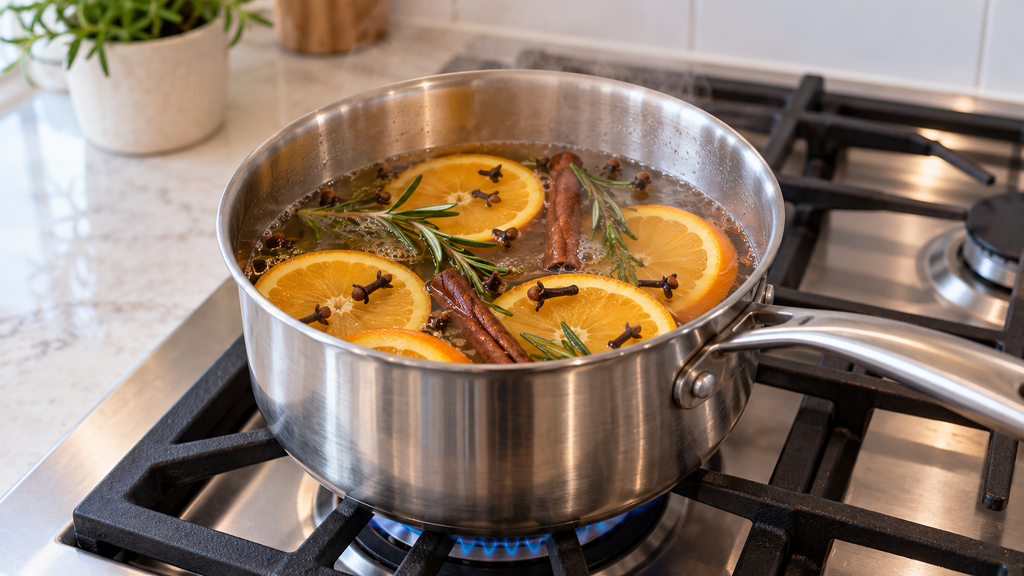
Always use stable cookware, low heat, and sufficient water.
Keep the saucepan and ingredients away from children and pets, and keep flammable materials clear of the burner.
Avoid unidentified botanicals and concentrated essential oils, especially around animals. If an animal swallows ingredients or liquid, contact a veterinarian.
Simmer pots provide scent, not medical benefits or air purification.
Never use fragrance to conceal persistent smoke, gas, or unusual indoor odors; investigate the source instead.
How Do You Store and Reuse Simmer Pots?
Fresh blends are best used promptly.
To reuse once, cool the mixture quickly, cover and refrigerate it, and preferably use it within about 24 hours.
Discard anything with mold, unusual odor, or deterioration. Do not store it overnight on the stove.
Why Does a Simmer Pot Smell Weak?
The water may not be warm enough, the ingredients may lack aroma, or ventilation may disperse the scent.
Give the mixture time, then add a little citrus peel or another selected aromatic.
If it becomes harsh, remove strong spices.
Rapid water loss means the heat should be reduced. Discard scorched mixtures.
Simmer Pot FAQs
How much water is needed?
Usually four to six cups for a medium saucepan, adjusted for capacity.
How soon will it smell?
Often within 10–20 minutes of warming, depending on ingredients and airflow.
Can I skip cinnamon?
Yes. Try lemon and rosemary or orange and ginger.
Can I reuse citrus peels?
Yes, if clean, fresh, and free from spoilage.
Is a simmer pot safe overnight?
No. Never leave a heated pot unattended or running while sleeping.
Can a slow cooker work?
Yes, if the appliance instructions allow it and you supervise it.
Can pets drink the water?
No. Prevent access and seek veterinary advice after accidental ingestion.
Does it purify air?
No. Simmer pots fragrance a room; they do not remove pollutants.
Final Thoughts
Start with a simple blend, match your ingredients to the scent you enjoy, and experiment in small adjustments.
A good simmer pot needs thoughtful proportions, gentle heat, and attention—not an elaborate recipe.
Always treat the liquid as non-edible home fragrance and supervise it throughout heating.
Myra is the founder of Simmer Pot Recipes, where she shares cozy simmer pot recipes, stovetop potpourri ideas, and natural home fragrance blends for every season. She helps readers make their homes feel warm, fresh, and inviting using simple fruits, herbs, spices, and everyday ingredients.