
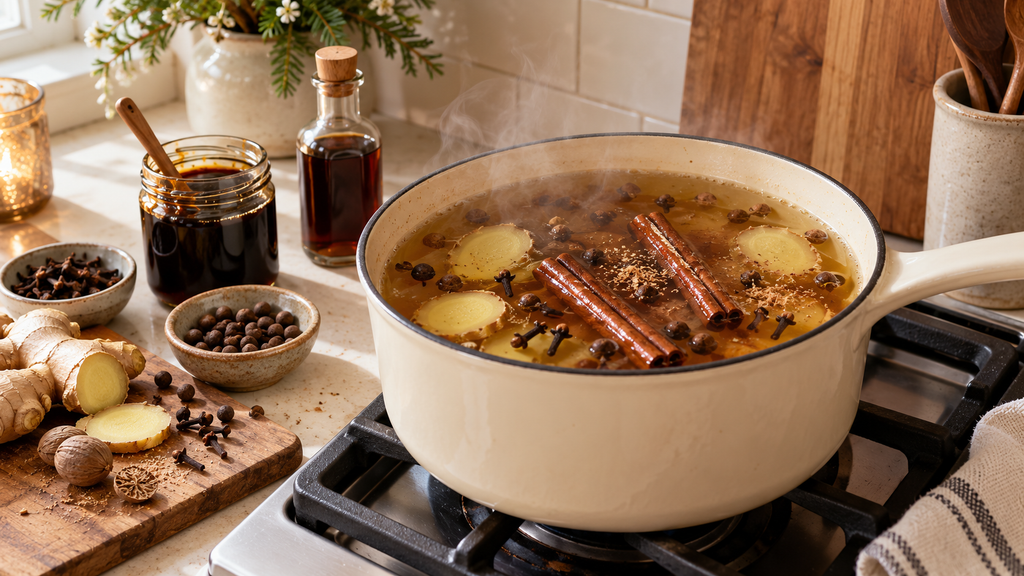
This gingerbread simmer pot recipe combines fresh ginger, cinnamon, cloves, allspice, nutmeg, vanilla, and molasses in gently simmering water. It creates a warm, spicy, slightly sweet home fragrance that resembles gingerbread baking without making cookies.
The key is balance. Ginger should remain noticeable, while cinnamon and other spices support it instead of taking over. Vanilla softens sharper notes, molasses adds deeper gingerbread character, and orange peel is optional if you want a brighter holiday scent.

Gingerbread Simmer Pot With Fresh Ginger & Vanilla
Ingredients
Equipment
Method
- Instructions:
- Wash the fresh ginger and cut it into thin slices.
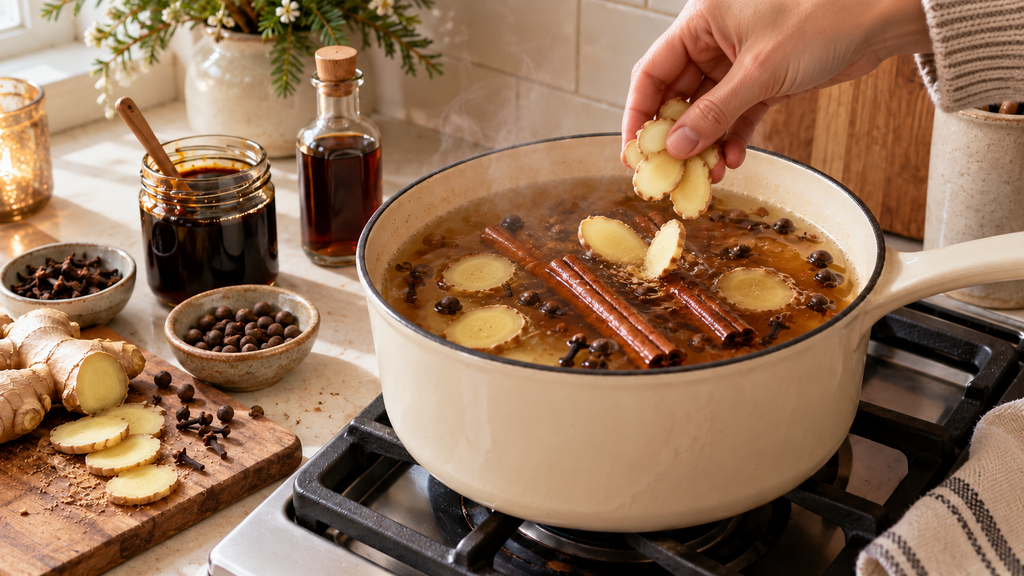
- Add the ginger, cinnamon sticks, allspice berries, cloves, and cracked nutmeg to a 3-quart saucepan.
- Pour in 5 cups of water.
- Heat over medium until gentle steam and small bubbles begin to appear.
- Reduce the heat to low, then stir in the vanilla extract and molasses.
- Maintain a gentle simmer and check the water level every 20–30 minutes.
- Add more hot water whenever the liquid level becomes low, keeping the aromatic ingredients surrounded by water.
- Turn off the heat when finished or before leaving the room for an extended period or leaving home.
Notes
Gingerbread Simmer Pot Ingredients
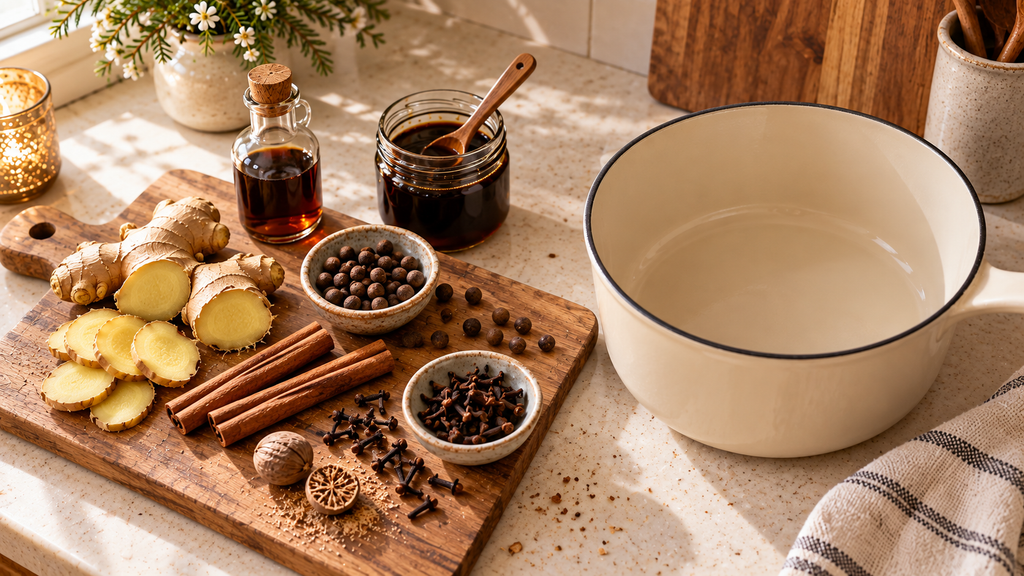
Fresh ginger provides the main gingerbread identity. Cinnamon adds warm sweetness, while cloves, allspice, and nutmeg create deeper bakery-style spice. Vanilla smooths the blend, and molasses adds a darker note associated with gingerbread.
Whole spices are best when possible because they release fragrance gradually and are easier to remove if one scent becomes too strong. Ground spices can work, but they create more sediment and may become overpowering faster.
Orange peel is optional. Leave it out for a more cookie-like gingerbread fragrance or add a small amount when you want a brighter Christmas-style scent.
How to Make a Gingerbread Simmer Pot
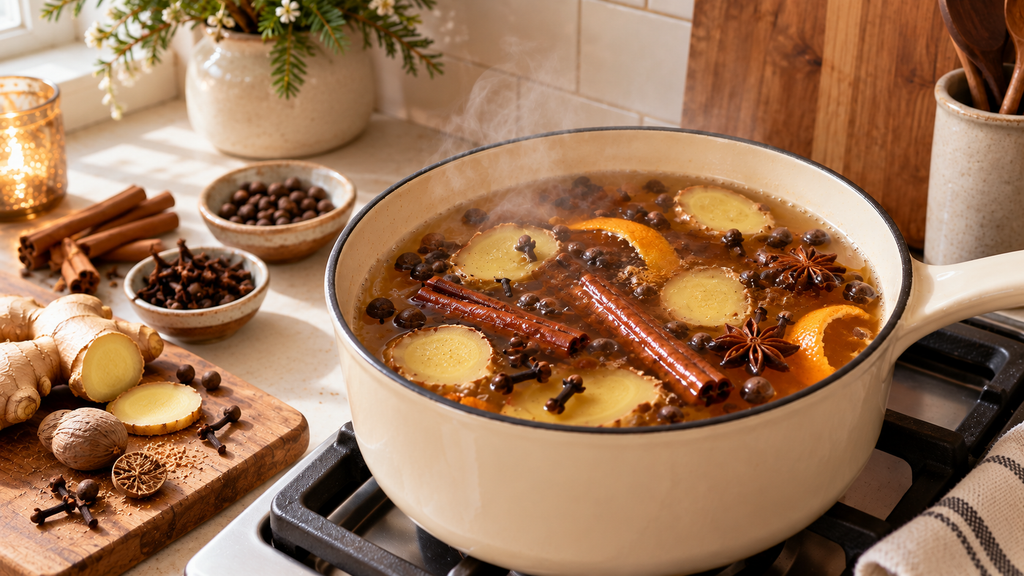
Wash the ginger and slice it thinly. Lightly crack the nutmeg so more of its surface is exposed.
Pour 6 cups of water into a 2–3 quart saucepan. Add the ginger, cinnamon sticks, cloves, allspice, nutmeg, and optional orange peel.
Heat over medium until steam appears and small bubbles begin forming. Reduce the heat to low before the mixture reaches a rolling boil.
Stir in the molasses and vanilla.
Let the mixture simmer uncovered over low heat. You want gentle steam and occasional bubbles rather than constant boiling.
After 20–30 minutes, check the fragrance. If possible, leave the room briefly and return so you can judge the scent more accurately.
While simmering:
- add hot or warm water whenever the level drops;
- keep the spices surrounded by liquid;
- avoid increasing the heat just to make the scent stronger;
- adjust only one ingredient at a time;
- turn off the burner before leaving home or going to sleep.
A simmer pot works through warm fragrant steam. It does not need to reduce like a sauce, so maintaining enough water is more important than using high heat.
Why Does It Smell Like Gingerbread?
The gingerbread fragrance comes from several aromas working together.
Fresh ginger gives the blend its identity. Cinnamon, allspice, and nutmeg create the warm body. Cloves add depth but should remain a background accent. Vanilla softens the stronger spices, while molasses adds darker gingerbread character.
A useful way to remember the balance is:
- Identity: ginger
- Warm body: cinnamon, allspice, nutmeg
- Accent: cloves
- Softener: vanilla
- Dark base: molasses
You can also use the Simmer Pot Recipes 3–2–1 Gingerbread Formula:
- 3 warm spices: cinnamon, cloves, allspice
- 2 gingerbread anchors: ginger and molasses
- 1 softener: vanilla
Nutmeg works as supporting warmth.
This is a practical scent-balancing framework, not a traditional gingerbread formula. Its purpose is to help you decide what to adjust when the fragrance does not smell right.
Fresh vs Ground Ginger
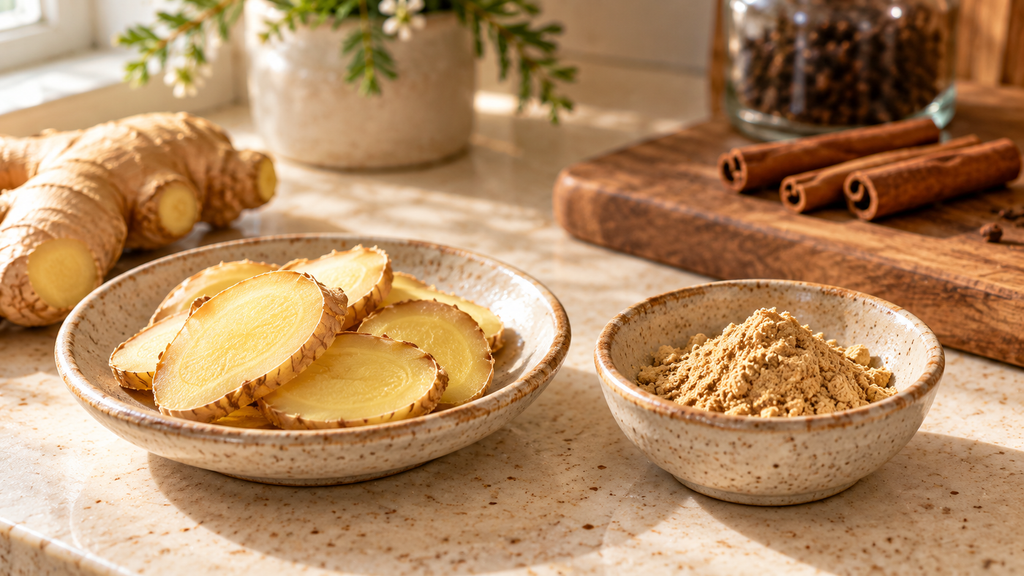
Fresh ginger is usually the better option because it creates cleaner fragrance, less sediment, and better control.
Start with a 2-inch piece sliced thinly. If the pot does not smell gingery enough after 20–30 minutes, add a few more slices.
Ground ginger works when fresh ginger is unavailable. Start with about ½ teaspoon and increase gradually if needed. It releases fragrance faster but can make the water cloudy.
Use fresh ginger when you want a cleaner pot and easier adjustments. Use ground ginger when convenience matters more than appearance.
Do You Need Molasses?
Molasses is optional, but it helps create a deeper gingerbread-style aroma.
One tablespoon is enough for the base recipe. Adding much more can create sticky residue without improving the scent significantly.
If you do not have molasses, substitute about 1 tablespoon dark brown sugar or leave the sweetener out completely.
Without molasses, the fragrance becomes lighter and more spice-forward. If needed, add a little extra vanilla to maintain a softer bakery character.
Gingerbread Simmer Pot Troubleshooting
If the fragrance does not smell right, identify the problem before adding more ingredients.
The Scent Is Too Weak
Check that the water is producing visible steam and give the mixture at least 20–30 minutes.
If it still feels weak, add a few slices of fresh ginger or one cinnamon stick. Avoid immediately adding extra cloves because they can become overpowering.
It Smells Like Cinnamon
The ginger is probably too weak.
Add two to four fresh ginger slices and simmer for another 10–15 minutes before making another adjustment.
It Smells Too Much Like Cloves
Remove some cloves and add more water.
Let the mixture rebalance before adding anything else. Cloves should provide depth, not become the first scent you notice.
It Smells Too Sweet or Heavy
Add water and fresh ginger.
This reduces the concentration of molasses or vanilla while restoring stronger gingerbread definition.
It Smells Muddled
Stop adding ingredients.
Too many competing aromatics can hide the gingerbread profile. Return to the core combination of ginger, warm spices, vanilla, and a small amount of molasses.
It Smells Burnt
Turn off the heat immediately.
If the water evaporated too far and the ingredients scorched, starting over is usually better than trying to cover the burnt aroma.
How Long Should It Simmer?
A gingerbread simmer pot usually develops noticeable fragrance within 20–30 minutes.
For most uses, simmering for about 1–3 hours works well as long as you maintain the water level.
Fragrance strength depends on:
- room size;
- ventilation;
- spice freshness;
- heat level;
- saucepan shape;
- water level.
A wide saucepan may release fragrance faster but also loses water faster. A deeper saucepan usually gives a slower, steadier effect.
If guests are coming, starting the pot about 30–60 minutes beforehand gives the fragrance time to develop.
How to Adjust It for Your Space
A simmer pot will behave differently in a small kitchen and a large open-plan room.
For a small kitchen or apartment, start with the standard recipe and check the fragrance after 20–30 minutes. If it becomes strong quickly, lower the heat or add water.
For a medium room, use the standard quantities and give the pot 30–45 minutes before adding more ingredients.
For a large or open-plan area, allow more time before increasing the spices. A wider saucepan can help release fragrance faster, but you will need to check the water more often.
Strong ventilation can also make a simmer pot seem weak. Consider open windows, fans, or extractor systems before changing the recipe.
Slow Cooker Gingerbread Simmer Pot
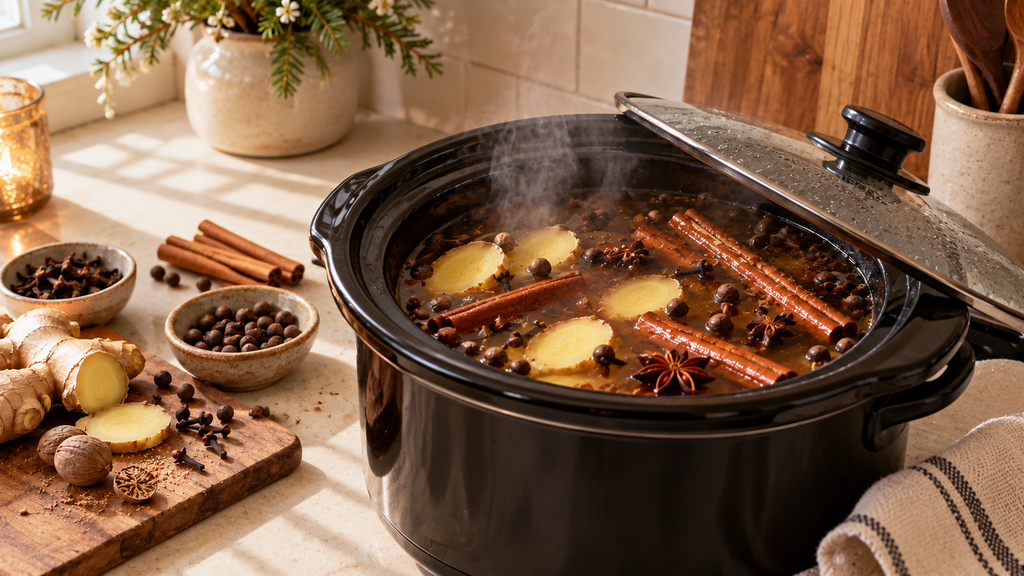
You can make the same blend in a slow cooker for a slower, steadier fragrance.
Add the ingredients and water, cover, and heat on high until the mixture becomes hot and steamy.
Switch to low and partially open or remove the lid so fragrance can escape.
Continue checking the water level.
Use the stovetop when you want fragrance quickly. Use the slow cooker when you want a gentler scent over a longer period.
Gingerbread Simmer Pot Substitutions
If fresh ginger is unavailable, use about ½ teaspoon ground ginger.
Replace cinnamon sticks with about ½ teaspoon ground cinnamon.
Use approximately ⅛ teaspoon ground cloves instead of whole cloves.
Replace whole allspice with about ¼ teaspoon ground allspice.
Use a small pinch of ground nutmeg instead of cracked whole nutmeg.
Vanilla bean or vanilla paste can replace vanilla extract, while dark brown sugar can replace molasses.
Orange, apple, cranberry, and other seasonal ingredients are variations rather than true substitutes because they change the fragrance instead of replacing ginger’s role.
Is a Gingerbread Simmer Pot Safe?
Keep the heat low and maintain enough water so the ingredients never sit against a dry saucepan.
Important safety rules include:
- keep children and pets away from the hot pot;
- check the water regularly;
- never allow the saucepan to boil dry;
- do not leave a heated simmer pot unattended;
- turn it off before leaving home or sleeping;
- ventilate the room if the fragrance becomes uncomfortable.
Do not allow pets to drink the liquid or eat the ingredients. If your pet has respiratory or other medical sensitivities, ask your veterinarian about household fragrance use.
This simmer pot is for home fragrance only and should not be consumed.
How to Store and Reuse It
You can reuse the mixture for a short second fragrance session if it was cooled and refrigerated properly.
After use:
- Turn off the heat.
- Allow the mixture to cool.
- Cover it and refrigerate it.
- Add fresh water before reheating.
Once hot, check the fragrance before adding new ingredients.
Add fresh ginger if the gingerbread identity has faded, one cinnamon stick if the warm spice note is weak, or a little vanilla if the fragrance feels sharp.
Discard the mixture if you notice mold, sour odor, obvious deterioration, or improper storage.
For cleanup, strain out solid ingredients before disposing of the liquid. Soak sticky molasses residue in warm water before washing the saucepan.
Gingerbread Simmer Pot Variations
Gingerbread Cookie Style
Skip the orange and add slightly more vanilla for a softer bakery-style fragrance.
Brighter Gingerbread
Add two strips orange peel for a fresher top note without making citrus dominant.
Softer Vanilla Gingerbread
Use up to 2 teaspoons vanilla and slightly fewer cloves for a gentler spice profile.
Stronger Gingerbread
Add another ½–1 inch fresh ginger rather than extra cloves.
FAQs
Can You Make a Gingerbread Simmer Pot Without Molasses?
Yes. Leave it out or replace it with about 1 tablespoon dark brown sugar. The scent will be lighter but still warm and gingery.
Can You Make It Without Orange?
Yes. Orange is optional. Leaving it out creates a more cookie-like gingerbread fragrance.
Is Fresh Ginger Better Than Ground Ginger?
Fresh ginger gives cleaner fragrance and less sediment. Ground ginger works too; start with about ½ teaspoon.
Why Doesn’t My Simmer Pot Smell Strong?
Check that the water is steaming and give it enough time. If needed, add fresh ginger or one cinnamon stick.
Can You Make It in a Crock-Pot?
Yes. Heat the mixture until steamy, switch to low, and partially open the lid so fragrance can escape.
Can You Reuse It the Next Day?
Yes, if it was cooled and refrigerated properly. Add fresh water first and refresh the ginger, cinnamon, or vanilla only if needed.
Myra is the founder of Simmer Pot Recipes, where she shares cozy simmer pot recipes, stovetop potpourri ideas, and natural home fragrance blends for every season. She helps readers make their homes feel warm, fresh, and inviting using simple fruits, herbs, spices, and everyday ingredients.