
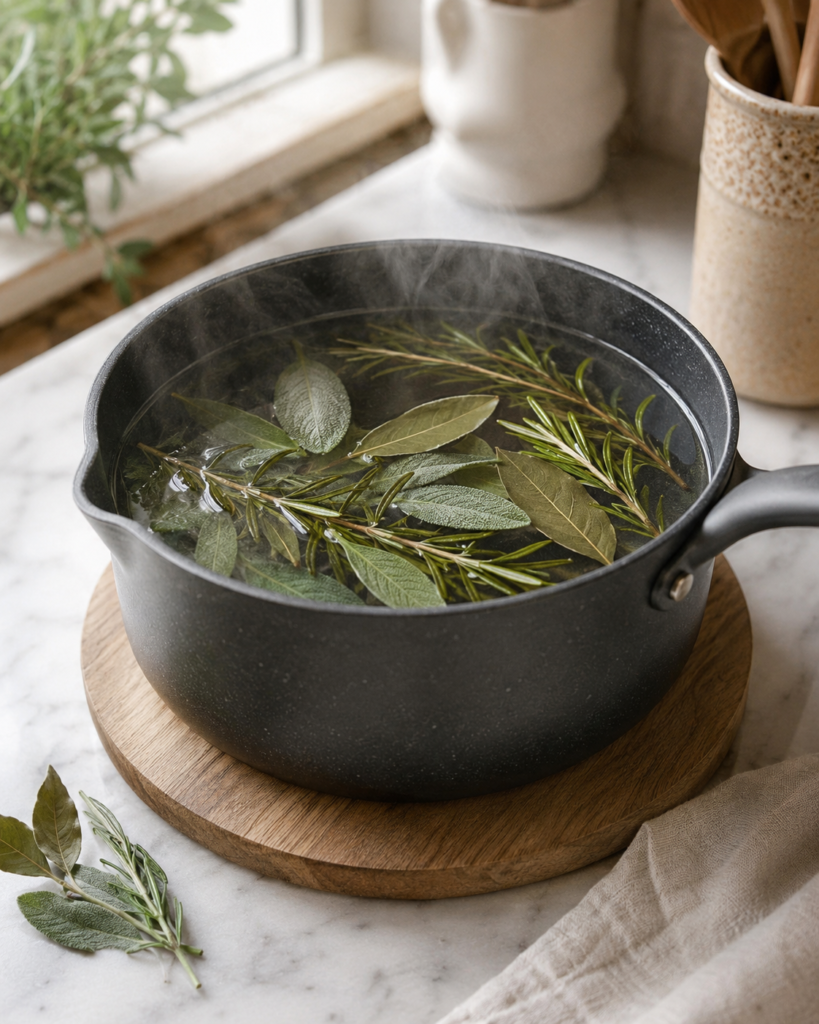
Pet friendly simmer pot recipes should focus on simple ingredients, light fragrance, good ventilation, and careful supervision—not on claiming that one blend is safe for every animal. For homes with dogs and cats, a more cautious approach is to use mild botanical ingredients such as rosemary, sage, bay leaves, and only a few optional drops of vanilla while avoiding concentrated essential oils and several stronger traditional simmer-pot ingredients.
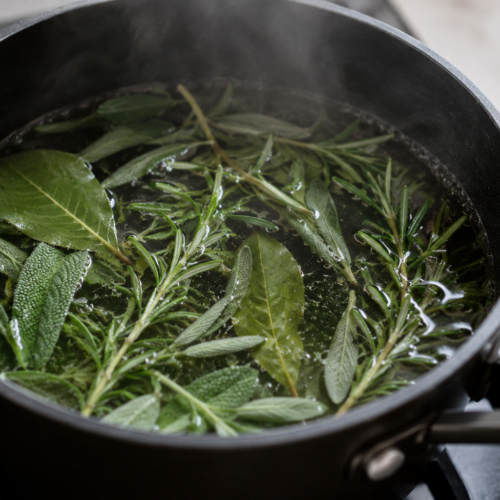
Pet-Conscious Rosemary & Sage Simmer Pot

Equipment
- 3-quart Saucepan or small stockpot
- Measuring cup
Ingredients
Simmer Pot Ingredients:
- 2 small fresh rosemary sprigs
- 2 fresh sage leaves
- 2 dried bay leaves
For Simmering:
- 5 cups water
- 3–5 drops vanilla extract, optional
Instructions
- Rinse the rosemary and sage.
- Add the rosemary, sage, and bay leaves to the saucepan.
- Pour in 5 cups of water.
- Add 3–5 drops of vanilla extract, if using.
- Heat over medium heat until gentle steam and small bubbles appear.
- Reduce the heat to low.
- Simmer gently uncovered for up to 1½ hours.
- Check the water level every 20–30 minutes.
- Add more hot water whenever the level becomes low.
- Turn off the heat when finished.
Notes
Recipe Notes:
- Use only 1 rosemary sprig if you want a lighter herbal fragrance.
- Add one extra rosemary sprig rather than essential oil if you want a stronger scent.
- Keep the vanilla optional and use only a few drops.
- Do not add citrus peels, cinnamon sticks, cloves, essential oils, liquid potpourri, or concentrated fragrance oils to this pet-conscious blend.
- Use the simmer pot in a ventilated room and allow your dog or cat to move away from the fragrance.
- Stop using the blend if your pet appears uncomfortable, and ask your veterinarian if you are unsure about any ingredient.
This guide uses the term pet-conscious rather than “pet-safe.” Individual pets can react differently to fragrance, so keep the saucepan out of reach, let your pet leave the scented room, and ask your veterinarian if your animal has breathing problems, known sensitivities, or another health concern.
Pet Friendly Simmer Pot Recipes: Safety First
No simmer pot can be guaranteed safe for every dog or cat. A scent that feels mild to you may be much stronger to an animal, especially in a small or poorly ventilated room.
For a more pet-conscious setup:
- Keep the ingredient list short.
- Keep the fragrance light.
- Avoid concentrated essential oils.
- Use an open or ventilated room.
- Keep the pot away from beds, crates, food, and water.
- Let your dog or cat move away from the fragrance.
- Stop using the blend if your pet appears uncomfortable.
This article focuses mainly on homes with dogs and cats. Birds and other small animals may have different respiratory sensitivities, so ask an appropriate veterinarian before using fragranced steam around them.
Pet-Conscious Ingredients
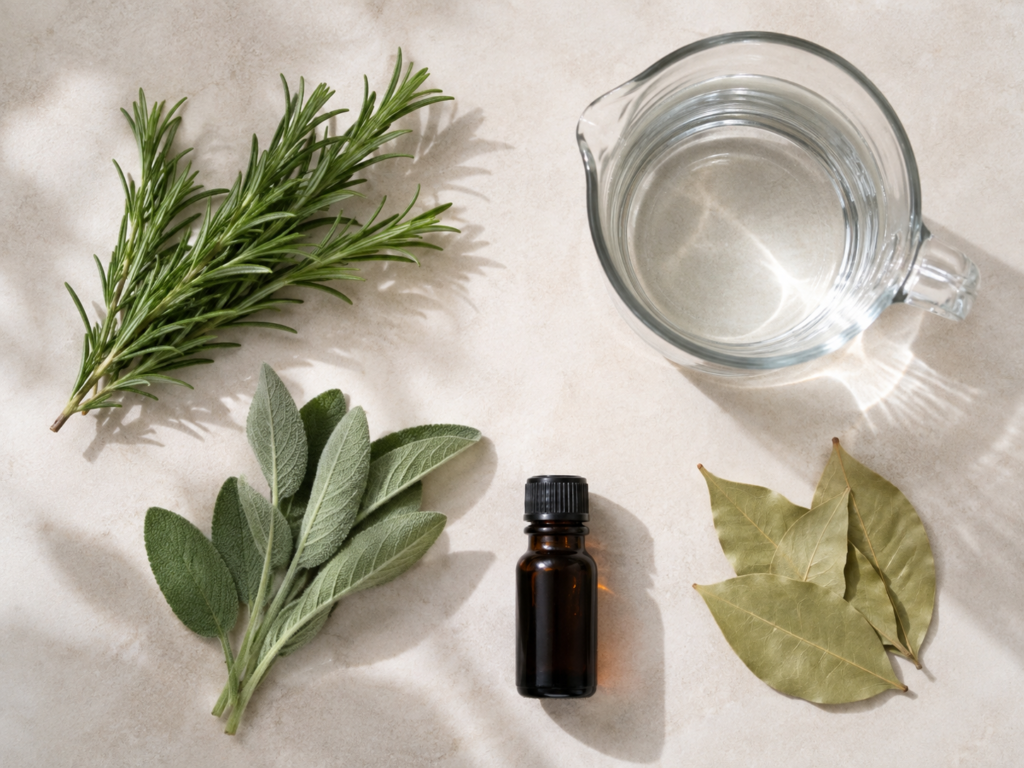
A simple simmer pot is easier to control than a mixture packed with fruit, spices, oils, and extracts.
Better Starting Choices
For the recipes in this guide, use:
- Fresh rosemary
- Fresh sage
- Bay leaves
- Plain water
- A few drops of vanilla extract, optional
Rosemary, sage, bay leaves, and a small amount of vanilla are useful starting points for a lighter botanical fragrance. Rosemary also gives enough scent on its own for readers who want the shortest possible ingredient list.
Ingredients We Leave Out
For these pet-conscious recipes, skip:
- Orange, lemon, and lime peels
- Cinnamon sticks
- Whole cloves
- Essential oils
- Liquid potpourri
- Concentrated fragrance oils
These ingredients are not necessary for a noticeable simmer-pot scent. Keeping them out also makes the recipe simpler and reduces the number of strong aromatics your pet is exposed to at one time.
4 Pet Friendly Simmer Pot Recipes
These four blends intentionally use fewer ingredients than traditional stovetop potpourri. The goal is a soft home fragrance rather than the strongest possible scent.
1. Rosemary & Sage Simmer Pot
This is the best all-purpose recipe in the article. Rosemary creates the main woody herbal note, while sage and bay add depth without making the fragrance overly complex.
Scent: Herbal • green • softly woody
Best for: Everyday light home fragrance
Use the vanilla only if you want a softer, slightly sweeter background.
2. Simple Rosemary Simmer Pot
For the shortest ingredient list, combine 2–3 fresh rosemary sprigs with 5 cups of water.
Scent: Fresh • herbal • woody
Let the rosemary warm gently before deciding the scent is too light. If you want a little more fragrance, add one extra sprig instead of adding essential oil.
3. Sage & Bay Simmer Pot
Combine 2–3 fresh sage leaves, 2 bay leaves, and 5 cups of water.f
Scent: Soft herbal • earthy
This is a good choice when you want something gentler than a spice-heavy simmer pot. If the scent becomes stronger than you prefer, add more water or shorten the simmering time.
4. Rosemary & Vanilla Simmer Pot
Combine 2 fresh rosemary sprigs, 5 cups of water, and 3–5 drops of vanilla extract.
Scent: Herbal • softly sweet
Keep the vanilla minimal. A few drops are enough to soften the rosemary without turning the recipe into a heavily perfumed blend.
Avoid Essential Oils
Essential oils are not necessary for pet-conscious simmer pots. Whole herbs simmered gently in water can create fragrance without adding highly concentrated oils.
Do not add peppermint, citrus, cinnamon, pine, tea tree, or other essential oils simply to make a weak simmer pot smell stronger. Concentrated oils can create additional risks for pets depending on the oil, concentration, and exposure.
If the fragrance seems too light, first let the herbs simmer for 15–20 minutes. Then adjust one whole botanical ingredient at a time. This keeps the blend easier to control and avoids turning a simple recipe into a highly concentrated scent source.
Keep Fragrance Light
A pet-conscious simmer pot should create a subtle scent rather than fill every room with strong fragrance.
Use it in a ventilated area and make sure your dog or cat can move into another room. Keep the saucepan away from pet beds, crates, food bowls, and water bowls.
Start with fewer ingredients and a shorter simmering period. You can always extend the time if the fragrance remains mild.
The best setup is simple:
- Light fragrance
- Open space
- Easy exit for pets
- Low simmer
- Active supervision
If your pet has an existing breathing problem or unusual sensitivity to scents, ask your veterinarian before using a simmer pot.
When to Stop Using It
Stop using the fragrance if your pet appears uncomfortable or develops concerning symptoms.
Possible warning signs that deserve veterinary attention can include:
- Drooling
- Vomiting
- Breathing difficulty
- Weakness or unusual lethargy
- Tremors
- Poor coordination
- Pawing at the mouth or face
These signs are not a home-diagnosis checklist. If you believe your pet has been exposed to something harmful or develops concerning symptoms, stop the fragrance and contact your veterinarian promptly.
Pet-Friendly vs. Pet-Safe
The phrase pet friendly simmer pot recipes describes what many readers search for, but “pet-safe” can sound like a universal guarantee.
At SimmerPotRecipes.com, pet-conscious means:
- Using simpler ingredients
- Avoiding universal safety promises
- Leaving out concentrated essential oils
- Keeping fragrance mild
- Using ventilation
- Keeping pets away from the pot and liquid
- Recommending veterinary advice when needed
This approach gives pet owners practical home-fragrance options while recognizing that individual animals may respond differently.
Simmer Pot Safety
Pet-conscious ingredients do not replace basic stovetop safety.
Always keep the pot attended, reduce the heat to low once gentle steam appears, and check the water every 20–30 minutes. Add more hot water before the level gets too low.
Never let the pot boil dry, let pets drink the simmer-pot water, or allow children or animals to reach the hot saucepan.
Pet Friendly Simmer Pot FAQs
Are simmer pots safe for dogs?
No simmer pot can be guaranteed safe for every dog. Keep the fragrance light, ventilate the room, and let your dog move away from the scented area.
Are simmer pots safe for cats?
Cats can be sensitive to strong fragrances and concentrated oils. Use simple ingredients, keep the scent mild, and avoid calling any blend universally cat-safe.
What can I put in a pet-conscious simmer pot?
Simple options include rosemary, sage, bay leaves, water, and a few optional drops of vanilla. Keep the ingredient list short and the fragrance mild.
What ingredients should I avoid around pets?
For these recipes, skip citrus peels, cinnamon sticks, cloves, essential oils, liquid potpourri, and concentrated fragrance products.
Is rosemary safe around dogs and cats?
Rosemary is commonly listed as non-toxic to dogs and cats, but that does not guarantee every animal will tolerate rosemary fragrance equally. Use a small amount and watch your pet’s response.
Can I add essential oils?
It is better to leave essential oils out. Whole herbs can provide fragrance without adding highly concentrated oils.
Should I ventilate the room?
Yes. Use the simmer pot in an open or ventilated space, keep the fragrance light, and make sure your pet can easily leave the room.
How long should I simmer a blend around pets?
There is no universal pet-safe simmering time. Start with a short, lightly scented session and stop if your pet avoids the area or appears uncomfortable.
Can pets drink simmer pot water?
No. Keep pets away from the saucepan, ingredients, and cooled simmer-pot liquid. The mixture is for home fragrance only.
Is “pet friendly” the same as “pet-safe”?
No. “Pet friendly” describes a more cautious approach, while “pet-safe” can sound like a guarantee. This site uses pet-conscious language instead.
Final Pet-Conscious Tips
The best pet-conscious simmer pot is usually a simple one. Start with one or two carefully selected botanicals, keep the scent light, ventilate the room, and let your dog or cat move away from the fragrance.
Avoid concentrated essential oils, keep enough water in the pot, and never leave the stove unattended. If you are unsure whether an ingredient is appropriate for your individual pet, ask your veterinarian before using it.
Myra is the founder of Simmer Pot Recipes, where she shares cozy simmer pot recipes, stovetop potpourri ideas, and natural home fragrance blends for every season. She helps readers make their homes feel warm, fresh, and inviting using simple fruits, herbs, spices, and everyday ingredients.