
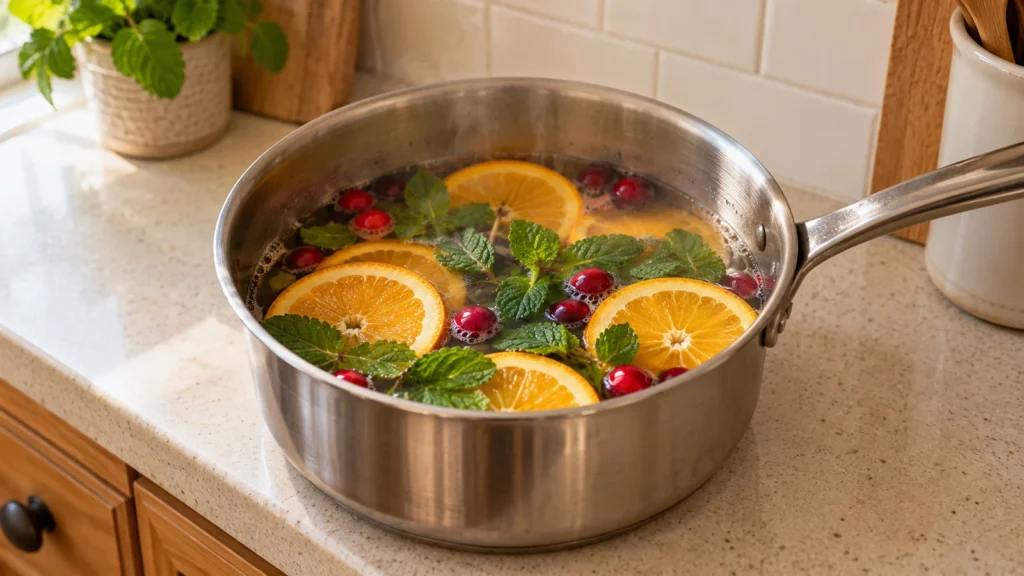
A peppermint simmer pot recipe combines water, fresh peppermint, citrus, and optional vanilla to create a clean mint-forward home fragrance. Fresh peppermint gives the softest herbal scent, while culinary peppermint extract can strengthen a weak batch. Keep the mixture at a gentle simmer, maintain the water level, and add peppermint gradually so the fragrance stays fresh rather than sharp.
For a basic batch, use 6 cups water, 10 to 12 fresh peppermint leaves, 1 small orange, optional cranberries, 1 teaspoon vanilla, and up to ¼ teaspoon peppermint extract if needed.

Peppermint Orange Simmer Pot Recipe
Ingredients
Equipment
Method
- Wash the orange and fresh peppermint, then slice the orange into thin rounds.
- Add the orange slices, cranberries, and 6 cups water to a 3-quart saucepan.
- Heat over medium heat until gentle steam and small bubbles begin to appear.
- Reduce the heat to low, then add the fresh peppermint leaves and vanilla extract.
- Simmer gently for 10–15 minutes, then add up to ¼ teaspoon peppermint extract only if you want a stronger peppermint fragrance.
- Continue simmering on low for 1–2 hours while attended.
- Check the water level every 20–30 minutes and add more hot water whenever the liquid becomes low.
- Turn off the heat before leaving the room for an extended period, leaving the home, or when you are finished using the simmer pot.
Notes
What Is a Peppermint Simmer Pot?
A peppermint simmer pot is a water-based home fragrance made by gently heating peppermint with ingredients such as orange, lemon, cranberry, vanilla, or a small amount of warm spice. As the water heats, steam carries the aroma through the room.
Peppermint creates a fresher result than cinnamon-heavy holiday blends. A good batch should smell clearly minty without becoming medicinal, while citrus or vanilla keeps the fragrance balanced.
Which Peppermint Should You Use?
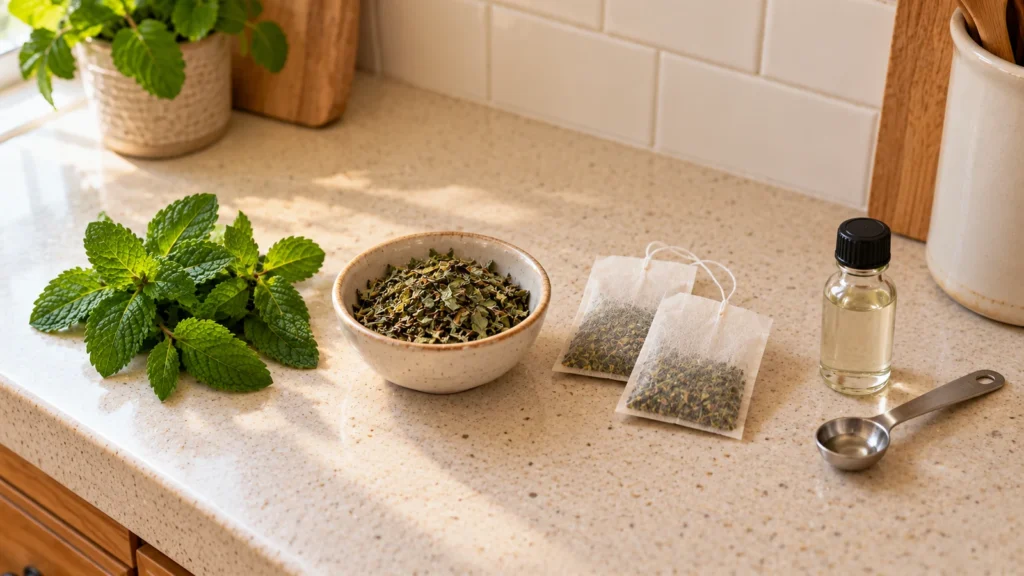
Fresh peppermint is the best starting choice because it gives a softer herbal fragrance and is easy to adjust. Start with 10 to 12 medium leaves for 6 cups of water.
Other useful options are:
- Dried peppermint: About 1 tablespoon.
- Peppermint tea bags: 1 to 2 unsweetened bags.
- Peppermint extract: About ¼ teaspoon to start.
Fresh leaves vary in strength, so treat these amounts as starting points. Peppermint essential oil is not necessary because fresh peppermint and culinary extract already provide enough fragrance and are easier to control.
Peppermint Simmer Pot Recipe Ingredients
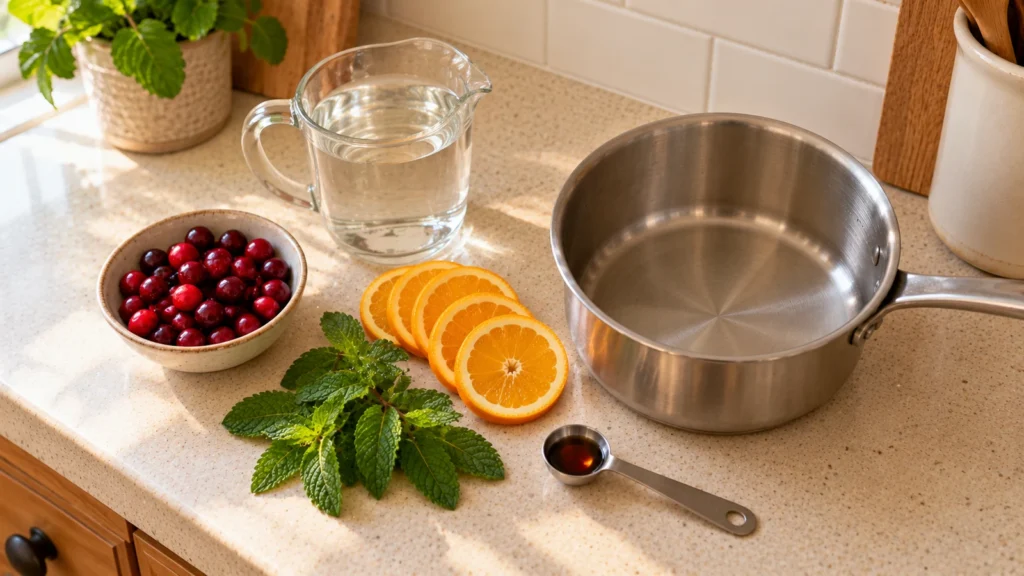
For a medium 2- to 3-quart saucepan, use:
- 6 cups water
- 1 small orange, thinly sliced
- ½ cup fresh or frozen cranberries, optional
- 10 to 12 fresh peppermint leaves
- 1 teaspoon vanilla extract, optional
- ¼ teaspoon peppermint extract, optional
- 1 star anise or a very small piece of cinnamon, optional
The simplest version needs only water, peppermint, and citrus. Orange adds brightness, vanilla softens sharp mint, and cranberries add seasonal character. Use strong spices lightly so they do not overpower the peppermint.
How to Make a Peppermint Simmer Pot
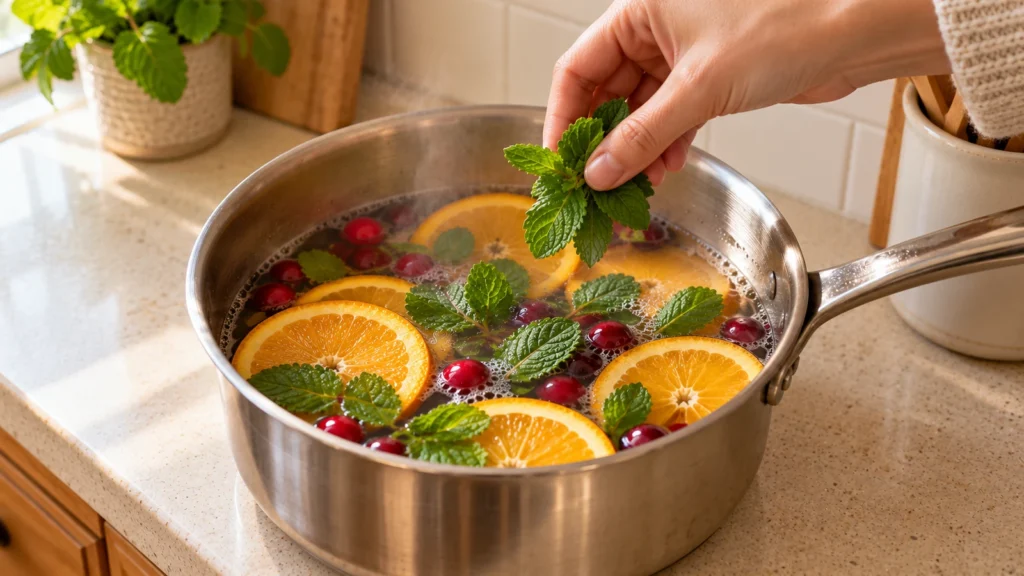
- Pour 6 cups of water into a medium saucepan and add the sliced orange and cranberries, if using.
- Heat over medium heat until gentle steam and small bubbles appear.
- Reduce the heat to low. Do not maintain a hard boil.
- Add 10 to 12 fresh peppermint leaves.
- Add 1 teaspoon vanilla if you want a softer scent.
- Let the mixture simmer for 10 to 15 minutes before deciding whether it needs more peppermint.
- If the fresh peppermint is too mild, add up to ¼ teaspoon culinary peppermint extract.
- Continue simmering for about 30 to 90 minutes while attended, checking the water regularly and adding more hot water before the ingredients become exposed.
Fresh peppermint is best added after the water becomes hot. Dried peppermint and tea bags can be added earlier, while extract is best added later so you can judge the strength of the fresh ingredients first.
Should You Boil or Simmer It?
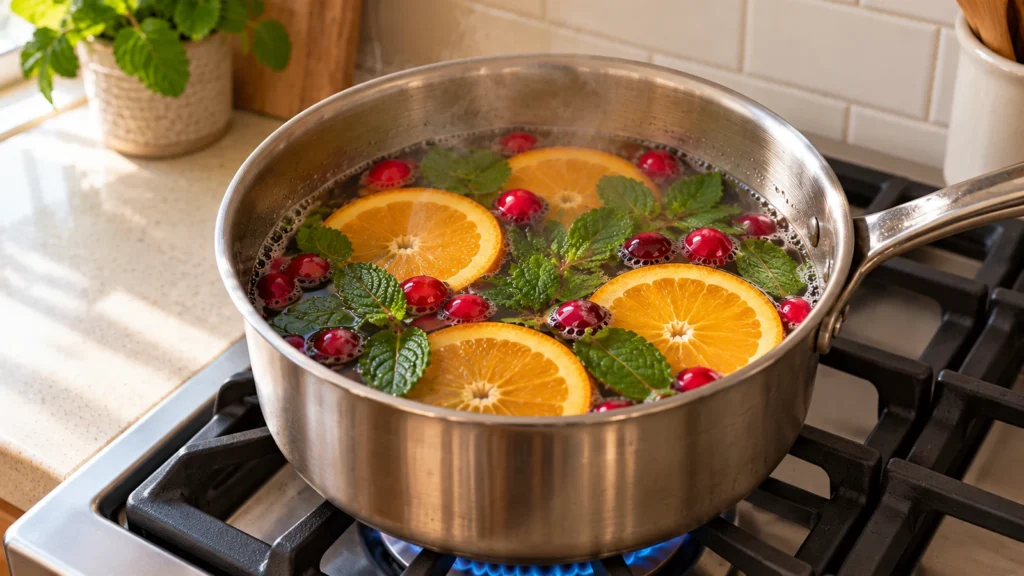
Keep a peppermint simmer pot at a gentle simmer, not a continuous boil. A brief initial boil can bring the water up to temperature, but lower heat is enough once the mixture is hot.
Strong boiling causes water to evaporate faster and can make extract, vanilla, spices, or sugar more concentrated. If the fragrance seems weak, give the peppermint time to warm before increasing the heat or adding more extract.
Does Your Simmer Pot Need More Peppermint?
Let the pot simmer for at least 15 minutes, then evaluate the fragrance from several feet away rather than directly above the saucepan.
Before adding more peppermint, check:
- Has the mixture heated long enough?
- Is the water level adequate?
- Is orange or spice dominating?
- Is the room large or highly ventilated?
If peppermint is genuinely weak, add two or three fresh leaves and wait another 10 minutes. If it still needs more strength, add a few drops of peppermint extract.
Change only one thing at a time. Stop adding peppermint once it is clearly recognizable and the supporting ingredients can still be noticed.
Why Does Your Peppermint Simmer Pot Smell Wrong?
Most problems come from peppermint being too weak, too strong, hidden by another ingredient, or unable to spread through the room.
Peppermint is weak: Give the pot more time, then add a few fresh leaves before using more extract.
It smells medicinal: Add 1 to 2 cups of water. If it still feels sharp, add orange or a little vanilla.
Orange or spice dominates: Adjust the dominant ingredient instead of making everything stronger. Add fresh mint if citrus is too strong, or remove some spice when possible.
It smells strong near the pot but weak elsewhere: The issue may be room size or airflow. A larger balanced batch is better than repeatedly adding concentrated extract.
Always restore the water level before changing the fragrance because low water can make the remaining ingredients seem stronger.
How Long Should a Peppermint Simmer Pot Simmer?
A peppermint simmer pot can usually run for 30 to 90 minutes, although you may notice the fragrance earlier.
Longer is not always better. Over time, peppermint softens, citrus develops a more cooked aroma, and warm spices may become more noticeable. For a bright peppermint fragrance, a fresh 30- to 60-minute batch may smell better than the same ingredients simmering for several hours.
For longer sessions, keep adding water and refresh the pot with a few fresh peppermint leaves if needed.
How Often Should You Add Water?
Check the water about every 15 to 20 minutes, especially until you know how quickly your saucepan evaporates liquid.
Add more water whenever the ingredients begin sitting too close to an exposed saucepan bottom. Low water can make peppermint extract, vanilla, spices, and sugar more concentrated.
Always correct the water level before deciding that the recipe needs more peppermint.
Can You Use Regular Mint Instead?
Yes. Spearmint and other culinary mint varieties can replace peppermint, but the finished fragrance will be softer and less cooling.
Peppermint is Mentha × piperita, while spearmint is Mentha spicata. Start with about 10 to 12 regular mint leaves and let them heat before deciding whether more is necessary.
If you specifically want a stronger peppermint character, add a small amount of culinary peppermint extract after the regular mint has heated. Otherwise, leave it out.
Which Peppermint Simmer Pot Variation Is Best?
Choose the variation based on the fragrance you want:
- Fresh: Peppermint + orange + a little lemon
- Soft: Peppermint + orange peel + vanilla
- Seasonal: Peppermint + orange + cranberries
- Warm: Peppermint + orange + a very small amount of cinnamon or star anise
- Simple: Peppermint + orange
Cinnamon is optional. Leaving it out can help peppermint remain clearer, especially when you want a fresh winter scent rather than a heavy holiday-spice blend.
Can You Make It in a Slow Cooker?
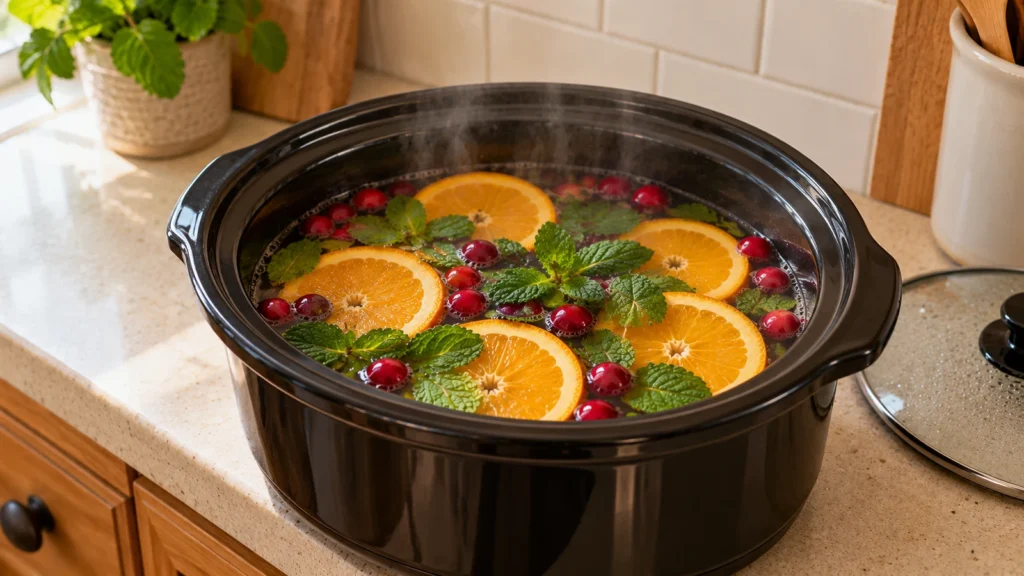
Yes. Add the water, fruit, peppermint, and optional ingredients to a slow cooker. Heat with the lid on until hot, then remove or slightly open the lid so fragrance can escape.
Use a low setting, follow your appliance instructions, monitor the water level, and do not allow the ingredients to dry out.
Is a Peppermint Simmer Pot Safe?
Treat a peppermint simmer pot as a hot home-fragrance mixture, not food or a beverage.
- Keep it out of reach of children.
- Do not drink the liquid.
- Prevent pets from drinking or eating the ingredients.
- Maintain enough water.
- Turn off the stove before sleeping or leaving home.
- Allow the mixture to cool before handling.
- Avoid concentrated peppermint essential oil for this method.
Do not describe a peppermint simmer pot as universally pet-safe. Keep the liquid and ingredients inaccessible, provide normal ventilation, and let animals move away from the scented area. Use extra caution with strong airborne fragrance around birds.
Can You Reuse a Peppermint Simmer Pot?
Yes. Let the mixture cool, cover and refrigerate it, then add fresh water before reheating. Refresh the fragrance with a few fresh peppermint leaves or orange peel rather than automatically adding more extract.
Discard it if it develops mold, an unusual odor, or visible deterioration.
Peppermint Simmer Pot Recipe FAQs
How much peppermint extract should you use?
Start with about ¼ teaspoon per 6 cups of water. Add only a few more drops if the fragrance remains too weak.
Can you use dried peppermint or peppermint tea?
Yes. Try about 1 tablespoon dried peppermint or 1–2 unsweetened peppermint tea bags when fresh leaves are unavailable.
Why can’t I smell the peppermint?
Give the pot 15 to 20 minutes and check the fragrance from several feet away. If mint is still weak, add fresh leaves before using more extract.
Why does it smell medicinal?
The peppermint is probably too concentrated. Add more water first, then soften the blend with orange or a little vanilla.
Can you leave it on overnight?
No. Turn off a stovetop simmer pot before sleeping, leaving home, or leaving it unattended because the water can eventually evaporate.
Myra is the founder of Simmer Pot Recipes, where she shares cozy simmer pot recipes, stovetop potpourri ideas, and natural home fragrance blends for every season. She helps readers make their homes feel warm, fresh, and inviting using simple fruits, herbs, spices, and everyday ingredients.