
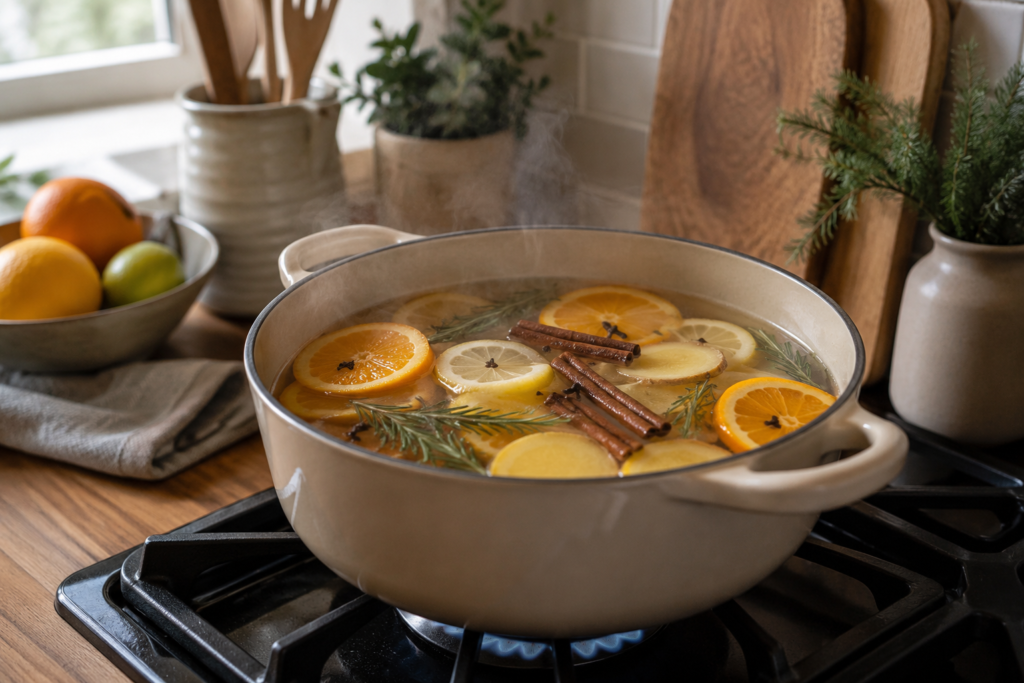
A simmer pot for colds and flu is a warm stovetop fragrance blend made with water, citrus, herbs, and spices. It does not cure illness, kill viruses, treat congestion, shorten symptoms, or replace medical care. Its value is comfort: gentle aroma, light steam, and a fresher-feeling home during cold and flu season.
The best cold-season blends use lemon, orange, ginger, cinnamon, cloves, rosemary, thyme, mint, apple, and bay leaf. Use them when the house feels stale, closed, or heavy and you want a softer natural fragrance instead of sprays, candles, or synthetic plug-ins.
Important: This article is about comfort and home fragrance only. If symptoms are serious or worsening, focus on professional care first.
Quick Cold-Season Simmer Pot Recipe
This simple simmer pot gives the home a clean citrus scent, gentle spice warmth, and a fresh herbal note.
Ingredients
- 5 cups water
- 1 lemon, sliced
- 1 orange, sliced
- 3–4 fresh ginger slices
- 2 cinnamon sticks
- 1 teaspoon whole cloves
- 1 rosemary sprig
Instructions
- Add everything to a medium saucepan.
- Warm until light steam appears.
- Lower the heat to a gentle simmer.
- Simmer for 1–2 hours while supervised.
- Add water every 30–45 minutes.
- Turn off before the water level gets low.
Use this recipe for stale winter kitchens, sick-day living rooms, cozy evenings, and a natural alternative to room sprays.
What Is a Cold Simmer Pot?
A simmer pot for colds and flu is water gently heated with aromatic ingredients to make the home smell fresh, warm, and comforting. It is also called stovetop potpourri. As the water warms, steam carries the scent through nearby rooms.
The purpose is atmosphere, not treatment. A simmer pot may add light moisture nearby and freshen a closed room, but it cannot cure illness, kill viruses, replace medicine, or replace rest, fluids, and medical guidance. Avoid phrases like “cold-fighting,” “flu remedy,” or “sinus cure.”
Best Cold-Season Ingredients
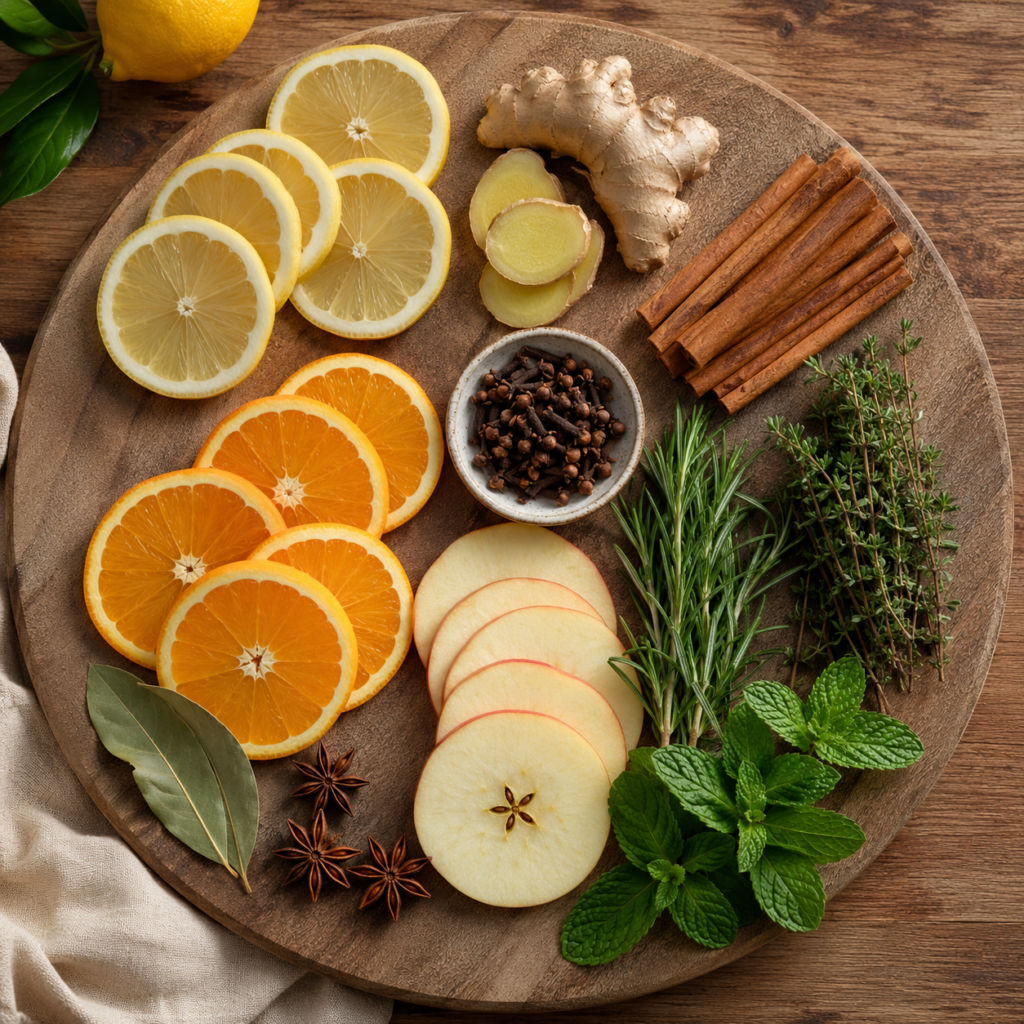
The best ingredients are citrus, warming spices, fresh herbs, and ginger. Simple blends work best because too many strong ingredients can feel heavy around people with headaches, nausea, cough, asthma, allergies, or scent sensitivity.
Best ingredients:
- Lemon or orange
- Fresh ginger
- Cinnamon sticks and cloves
- Rosemary or thyme
- Mint
- Apple, bay leaf, or star anise
The best beginner formula is 5 cups water, 1 citrus fruit, 1 warming spice, 1 fresh herb, and 2–3 ginger slices.
Best Cold-Season Simmer Pots
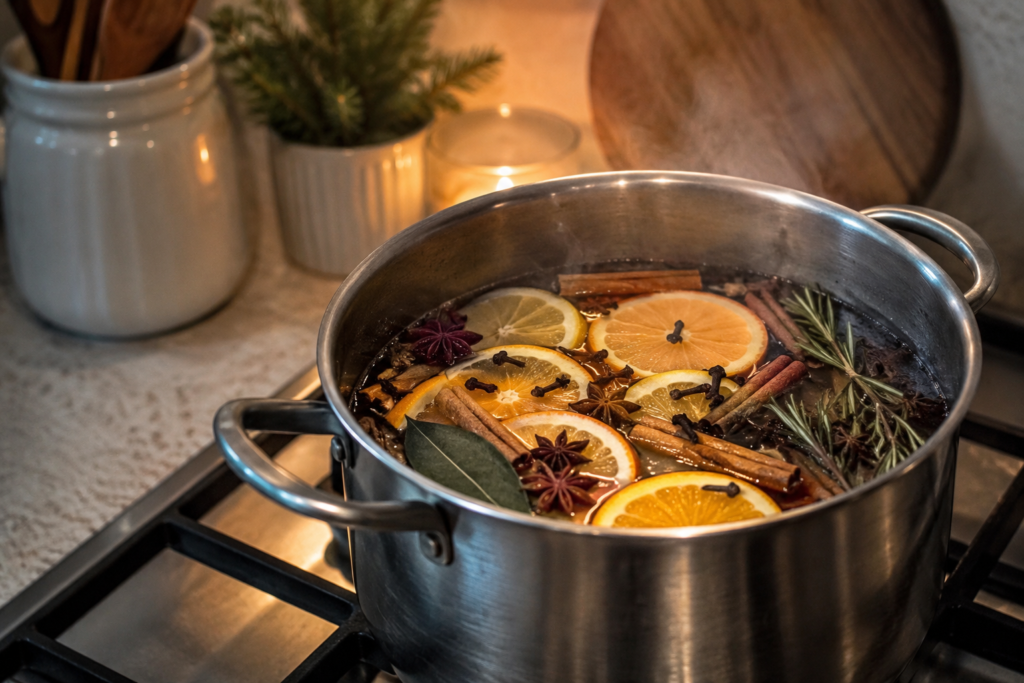
Different rooms need different blends. A stale kitchen may need citrus and herbs, while a cozy evening room may need orange, cinnamon, and clove.
Basic Citrus Spice Simmer Pot
- 5 cups water
- 1 lemon, sliced
- 1 orange, sliced
- 1 thumb-size piece fresh ginger, sliced
- 2 cinnamon sticks
- 1 teaspoon whole cloves
- 1 rosemary sprig
Simmer on low for 1–2 hours and add water every 30–45 minutes.
Lemon Ginger Simmer Pot
- 5 cups water
- 2 lemons, sliced
- 1 thumb-size piece fresh ginger, thinly sliced
- 1 small mint sprig
- 1 cinnamon stick
Use this for daytime freshness or a stale kitchen. Replace mint with rosemary if someone is sensitive to cool scents.
Orange Clove Simmer Pot
- 5 cups water
- 1 large orange, sliced
- Peel from 1 lemon
- 2 cinnamon sticks
- 1 teaspoon whole cloves
- 2 star anise pods
- 1 bay leaf
Use fewer cloves in small rooms and turn it off before bedtime.
Rosemary Thyme Simmer Pot
- 6 cups water
- 1 lemon, sliced
- 1 small piece fresh ginger
- 2 rosemary sprigs
- 3 thyme sprigs
This blend works well when the room smells stale, closed, or heavy.
Light Citrus Herb Simmer Pot
- 5 cups water
- 1 lemon, sliced
- 1 lime, sliced
- Orange peel
- 2 rosemary sprigs
- 1 small mint sprig
- 3 ginger slices
Use this if you want a simmer pot without cinnamon or cloves.
Can You Use Essential Oils?
Fresh mint can be used carefully, but eucalyptus, peppermint, and essential oils need caution. Strong scents may irritate children, pets, people with asthma, or anyone sensitive to fragrance.
A simmer pot should never be used as direct steam inhalation. Do not place your face over the pot or inhale the steam closely. For most homes, fresh herbs are better than concentrated essential oils.
Avoid peppermint essential oil, eucalyptus essential oil, tea tree oil, camphor products, vapor rubs, artificial fragrance oils, unknown oil blends, and cleaning oils in family or pet homes unless advised by a qualified professional.
How Long Should It Simmer?
Most cold-season simmer pots should run for 1–2 hours while supervised. Use gentle steam, not a rolling boil. Start with 5–6 cups water, keep the heat low, check every 30–45 minutes, and add water when the level drops by half.
Never leave it on while sleeping or away from home. If the ingredients look burnt or sticky, discard the mixture. For a stronger smell, refresh the ingredients instead of increasing the heat.
Can You Reuse or Prep It?
You can reuse a simmer pot once the next day if it still smells fresh and was refrigerated overnight. Add fresh water before reheating. Do not reuse it if it sat out overnight, smells sour, or looks unpleasant.
For prep-ahead kits, slice lemon, orange, and ginger, add rosemary or thyme, and refrigerate for up to 2 days. For dry kits, use dried citrus, dried ginger, cinnamon sticks, whole cloves, star anise, and dried rosemary. Label clearly: “Not for drinking.”
A slow cooker simmer pot works for longer, gentler fragrance. Use low or warm, keep the lid off or slightly open, and check the water often. For bedroom atmosphere, simmer it in the kitchen before bedtime, then turn it off.
How to Make It Stronger
To make a simmer pot smell stronger, refresh the ingredients instead of adding artificial fragrance or essential oils. Fresh citrus peel, thin ginger slices, lightly crushed herbs, and whole spices improve scent without making the room feel heavy.
A simmer pot can add light moisture nearby, but it will not control indoor humidity like a humidifier. Use a wide pot, keep the lid off, maintain a low simmer, and keep water above halfway. If windows collect moisture or the room smells musty, reduce moisture and ventilate.
Safety Mistakes To Avoid
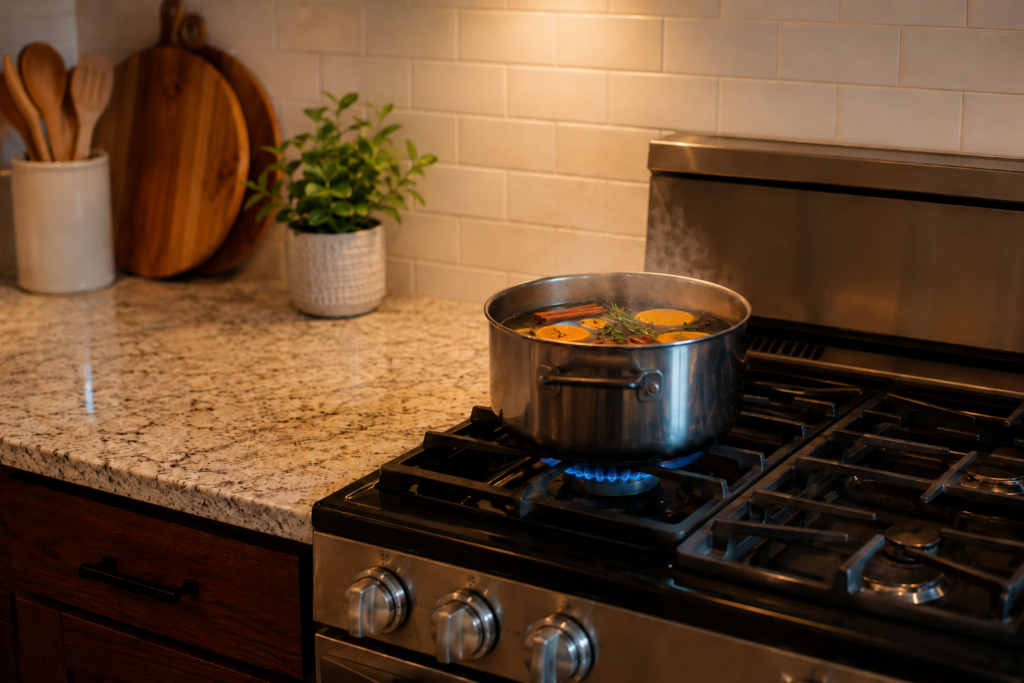
A simmer pot should contain water and kitchen-safe aromatic ingredients only. Do not add medicine, vapor rub, cough drops, bleach, disinfectants, perfume oils, camphor products, unknown dried herbs, strong essential oil blends, or anything unsafe to heat.
Avoid letting the pot boil dry, leaving it unattended, adding too many cloves, using too much mint, boiling instead of simmering, running it in a closed room, letting pets drink from it, calling it a cure, or drinking the liquid.
Around children, keep the pot on a back burner and turn handles inward. Around pets, keep the pot out of reach, avoid concentrated essential oils, ventilate lightly, and stop use if anyone seems irritated.
Can You Drink a Cold and Flu Simmer Pot?
No, do not drink a cold and flu simmer pot. A fragrance simmer pot is not the same as tea. It may include peels, herbs, spices, and ingredients that have simmered uncovered for hours.
Simmer pot equals room fragrance. Tea equals drink. If you want a warm drink, make a separate lemon ginger tea with fresh lemon, fresh ginger, clean hot water, and honey when age-appropriate.
When to Skip Simmer Pots
Skip the simmer pot if someone has trouble breathing, chest pain, blue lips, severe weakness, confusion, dehydration, very high fever, symptoms that improve then worsen, serious illness in a baby, worsening symptoms in an older adult, pregnancy with flu-like symptoms, or chronic health conditions with flu symptoms.
A simmer pot should never delay treatment, antiviral guidance, urgent evaluation, or professional care.
Final Thoughts
Simmer pot recipes are worth using during cold and flu season when you use them for comfort, not treatment. They are simple fragrance blends that can make the home smell warmer, fresher, and more cared for.
Use lemon, orange, ginger, cinnamon, cloves, rosemary, thyme, mint, apple, bay leaf, or star anise. Keep the water level high, use low heat, avoid strong essential oils, and never leave the pot unattended.
FAQ
Do simmer pots cure colds or flu?
No. Simmer pots do not cure, treat, prevent, or shorten colds or flu. They are used for home fragrance, light steam, and comfort during cold and flu season.
What is the best simmer pot recipe for colds and flu season?
The best cold-season simmer pot uses water, lemon, orange, ginger, cinnamon sticks, whole cloves, and rosemary. Simmer it on low for 1–2 hours while supervised.
Can I drink the liquid from a cold and flu simmer pot?
No. A simmer pot is for fragrance, not drinking. Make a separate lemon ginger tea if you want a warm drink.
Myra is the founder of Simmer Pot Recipes, where she shares cozy simmer pot recipes, stovetop potpourri ideas, and natural home fragrance blends for every season. She helps readers make their homes feel warm, fresh, and inviting using simple fruits, herbs, spices, and everyday ingredients.